Case Study · Automotive
Third-Party Dependency, Constant Downtime: How the automotive dealership group Built Its Own Inventory System
Client: the automotive dealership group
The Enterprise Challenge
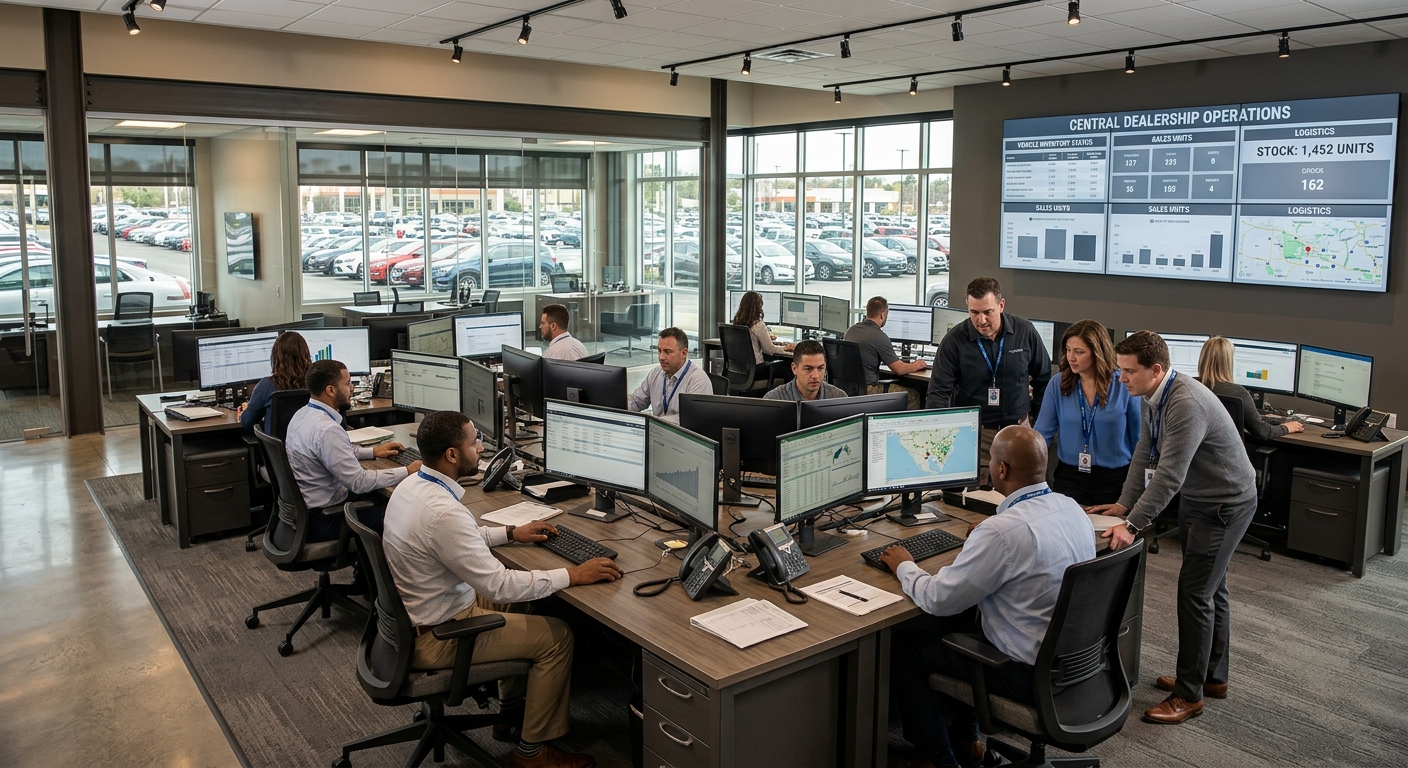
the automotive dealership group is a retail automotive dealership specializing in vehicle sales across the mid-Atlantic region. Like all dealerships, the quality of their online inventory presentation directly influences customer interest, buyers browse online before they visit a lot, and the inventory search experience is often the first meaningful interaction a potential buyer has with the dealership. the automotive dealership group understood this, but the system they were using to manage that experience was working against them.
the automotive dealership group had contracted a third-party service to manage inventory levels and operate a web-based vehicle search database. The costs were substantial, paid continuously regardless of performance. And performance was a recurring problem: the service experienced frequent downtime, taking the dealership’s inventory search offline at unpredictable intervals. When the system was down, so was the automotive dealership group’ ability to attract and convert online shoppers. Worse, the dealership’s own staff had no ability to update inventory independently. Every change, new arrivals, price adjustments, sold listings, required going through the vendor.
The Strategic Trigger
the automotive dealership group needed to own its inventory management capability entirely. That meant a custom web-based system that their staff could update directly, that was reliable by design (no third-party dependency), and that provided online shoppers with a fast, functional vehicle search experience. The solution also had to be cost-competitive with what they were currently paying the third party.
The Engagement Approach
Strategic Trigger
Legacy spreadsheet updates could not keep pace with sales
the automotive dealership group, a successful pre-owned dealership network, was struggling under the weight of an antiquated vehicle inventory process. Staff across multiple locations relied on manual spreadsheet updates to track thousands of cars. This system created constant reconciliation nightmares, as sales associates frequently sold vehicles already committed elsewhere or promised cars that had already left the lot. As sales volume grew, these near-misses escalated from administrative headaches to major customer frustrations. The time wasted tracking correct availability, rather than moving inventory, began to severely throttle the automotive dealership group’ growth and damage staff morale.
Leadership recognized that this administrative paralysis was unsustainable. A formal review confirmed that the spreadsheet-based workflow was fundamentally broken, causing accurate inventory visibility to lag days behind reality. To scale effectively and deliver the modern, reliable experience customers expected, the automotive dealership group needed a technological transformation. They formally committed to completely modernizing their inventory management, moving beyond manual tracking to a real-time digital system. This strategic pivot required replacing outdated processes with a robust, centralized application that would provide a definitive, reliable ‘single source of truth’ for all vehicle data across all physical and online sales channels.
Stakes
Stagnant inventory turnover risked millions in operational losses
Failure to solve the inventory problem presented significant direct financial risk. In the used vehicle market, profit margins are slim and rely heavily on rapid inventory turnover. Cars sitting unsold on the lot because staff couldn’t locate them or didn’t trust the data represented thousands of dollars in tied-up capital and depreciating assets daily. the automotive dealership group risked continuing to lose sales to competitors who could provide instant availability checks. Inaccuracies also meant increased holding costs and logistical overhead as vehicles were needlessly shuttled between lots to cover up for administrative confusion, directly cutting into profitability.
Beyond the immediate financial impact, the automotive dealership group faced a serious reputational crisis. Customer satisfaction in the automotive sector relies heavily on trust. Customers who traveled to a dealership expecting to view a specific vehicle, only to find it was sold days ago but still listed as available, often left frustrated and voiced their displeasure. This erosion of trust, combined with rising employee frustration from using broken tools, threatened the automotive dealership group’ brand reputation. Continued failure to modernize could have alienated customers permanently, jeopardizing the company’s long-term market position against competitors with smoother, digitally driven customer experiences.
Constraints and Complexity
Integrating real-time data across decentralized physical dealership locations
The core challenge was creating a modern, real-time application that had to operate reliably in dynamic dealership environments. Sales associates and mechanics needed instant, reliable access to vehicle location, status, and price, often while walking the lot with customers. The application had to integrate flawlessly with external systems for accurate VIN decoding, market pricing data, and photograph management. Developing this complex logic in-house was impossible, and adapting existing point solutions to the automotive dealership group’ specific workflows while achieving true real-time synchronization between disparate systems presented significant technical difficulties, especially given fluctuating data connectivity at some physical locations.
Moving from a familiar, flexible tool like Excel to a rigid, multi-user application represented a major cultural and operational shift. Thousands of existing vehicle records, containing decades of unique data points and inconsistencies, had to be scrubbed, mapped, and migrated accurately into the new database without disrupting ongoing operations. Staff required significant retraining to shift their daily workflow from manipulating spreadsheets to trusting and inputting data into a centralized system. The solution needed to be intuitive enough for rapid adoption, yet comprehensive enough to handle all nuances of the business, ensuring buy-in from all stakeholders.
Selection Rationale
Senior Microsoft Specialists with Proven Delivery Depth
the automotive dealership group evaluated various modernization options, including off-the-shelf dealership management software and general IT consulting firms. However, pre-packaged software was often too rigid, failing to accommodate the automotive dealership group’ unique multi-location workflows. Large, general consulting firms often relied heavily on offshore teams or junior commodity staffing, lacking the deep, localized expertise required for such a critical, custom build. These options either demanded unacceptable compromises in functionality or introduced excessive risk due to fragmented communication and a lack of direct accountability. the automotive dealership group required a partner that could offer deep expertise, proven results, and direct, senior-level engagement.
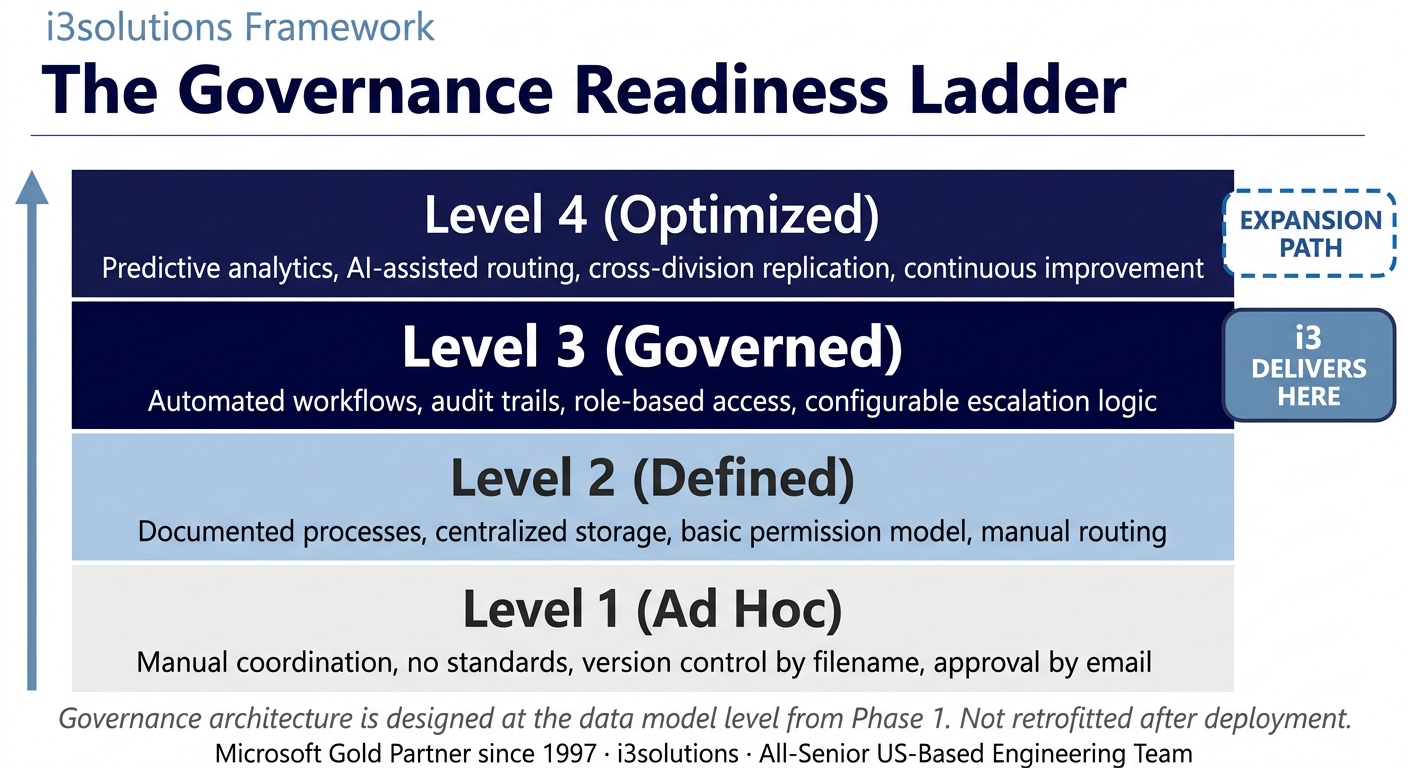
i3solutions emerged as the clear choice due to their unparalleled Microsoft specialization and depth of experience. As a Microsoft Gold Partner since 1997 with over 600 successful implementations, i3solutions demonstrated the deep technical mastery required. Crucially, they offered an all-senior, all-US-based development team, ensuring seamless communication, deep alignment, and direct access to top-tier expertise throughout the engagement. This proven combination of deep platform knowledge and a dedicated, senior-level US team provided the automotive dealership group with the confidence that i3solutions could deliver a stable, scalable, custom application that would solve their complex inventory challenges without the risks associated with other models.
Phase 1
Inventory Analysis
Documented the automotive dealership group’ inventory data structure, staff update workflows, and buyer search behavior to define system requirements.
Phase 2
System Architecture
Designed a custom .NET web application architecture with a database schema supporting the full inventory lifecycle.
Phase 3
Web App Development
Built the inventory management backend for staff use and the buyer-facing vehicle search interface with filtering, detail pages, and inquiry integration.
Phase 4
Staff Training
Trained the automotive dealership group staff on inventory update workflows and system administration.
Technical Transformation
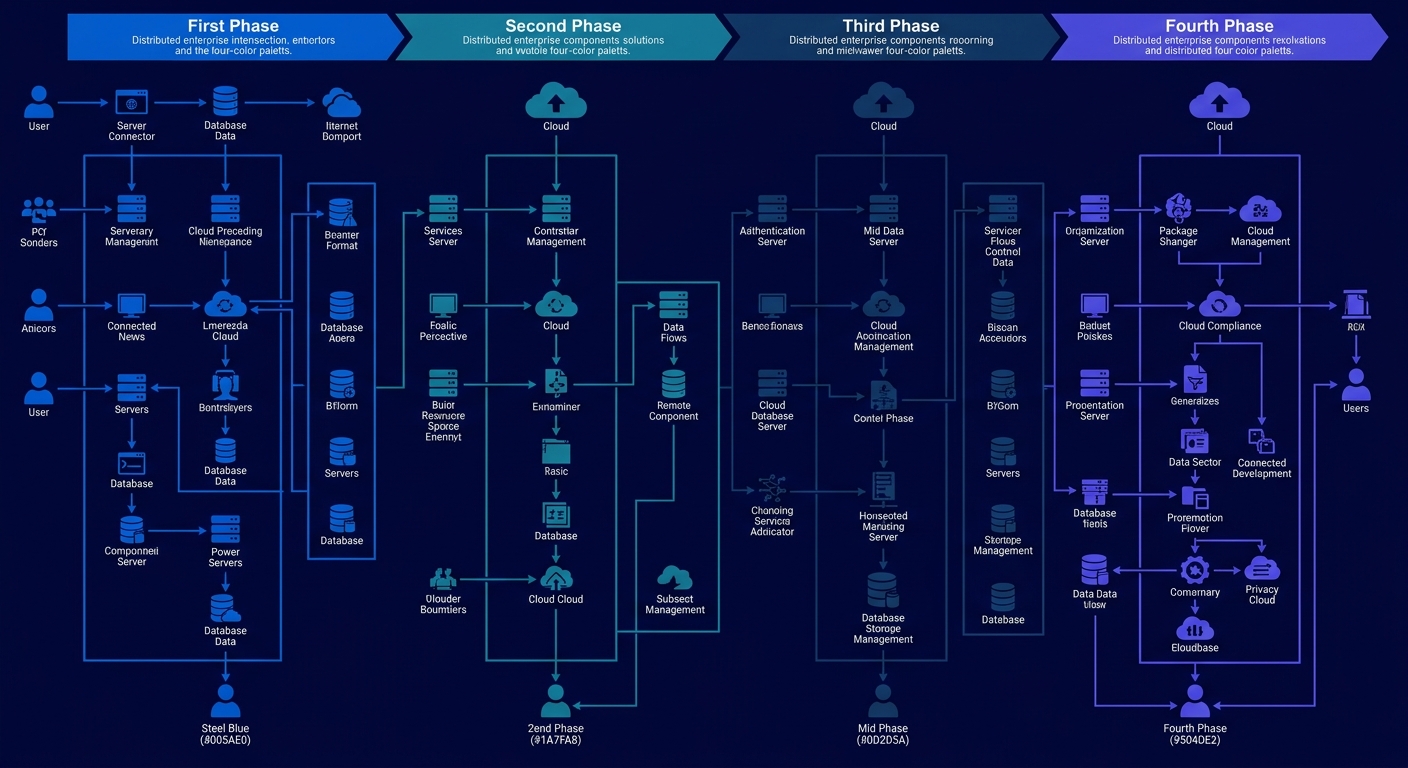
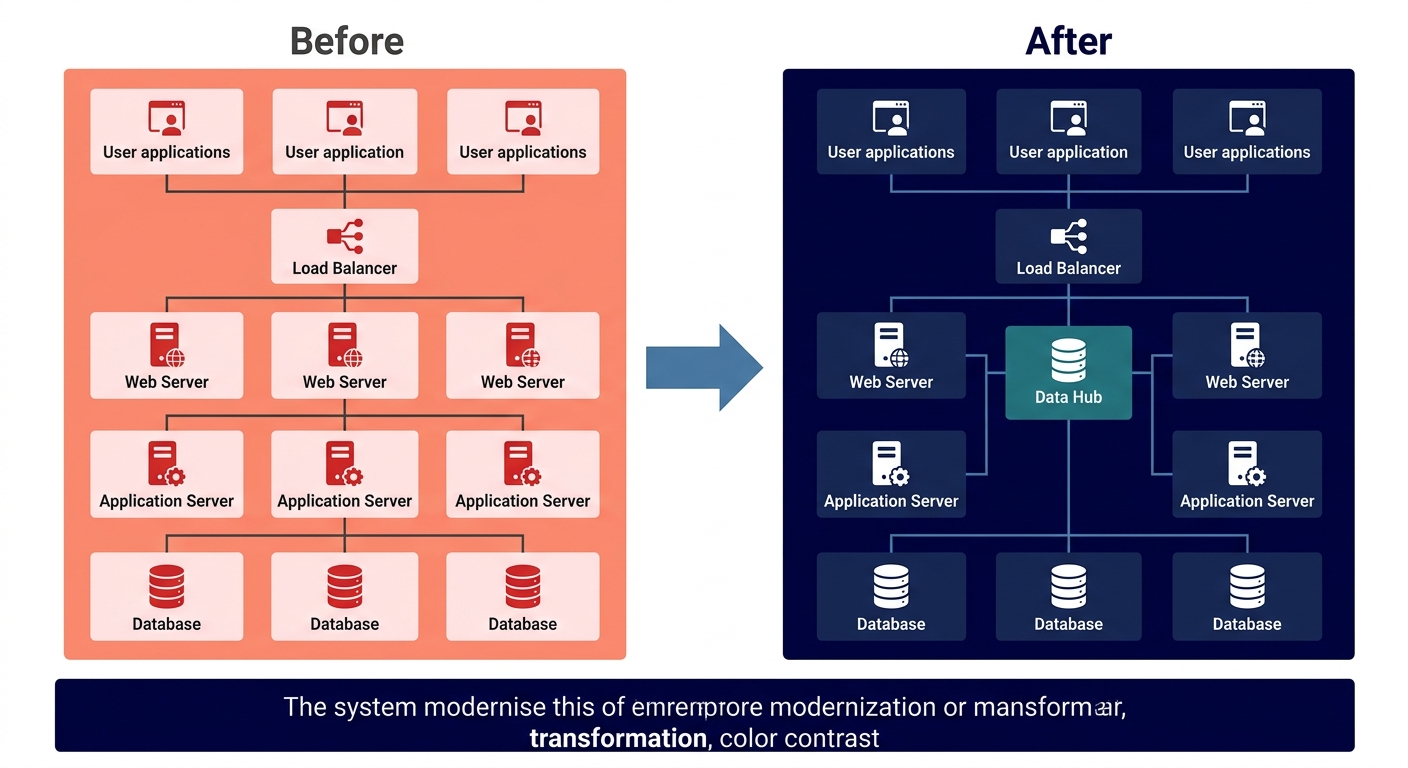
i3solutions delivered a fully custom .NET vehicle inventory management system that the automotive dealership group owns and controls entirely. Staff update listings directly through an administrative interface, new arrivals, price changes, and sold removals happen immediately without vendor involvement. Buyers browse a clean, fast vehicle search experience that is always available because it runs on infrastructure the automotive dealership group controls. The third-party dependency and its associated costs were eliminated completely.
Measurable Outcomes
| Metric |
Result |
| Vendor Eliminated |
Costly third-party inventory service fully replaced with a system the automotive dealership group owns and operates independently |
| Uptime Improved |
Dealership-controlled infrastructure eliminates the vendor-caused downtime that was disrupting online buyer experience |
| Staff Empowerment |
Inventory staff update listings directly without vendor intermediation, changes are live immediately |
| Cost Reduction |
Monthly third-party service fees eliminated, with ongoing costs limited to maintenance of owned infrastructure |
| Buyer Experience |
Online shoppers access a faster, more reliable vehicle search that reflects current inventory in real time |
[PENDING-CLIENT-QUOTE: insert 1-3 sentence outcome-focused quote in the client’s own language from a role matching the reader’s role.]
[Name or Role], [Organization type]
Frequently Asked Questions
What is a custom vehicle inventory management system and when does a dealership need one?
A custom vehicle inventory management system is a web application built specifically for a dealership’s operations, giving staff direct control over listing management and buyers a search experience designed for the dealership’s inventory characteristics. A dealership typically needs a custom system when third-party services are too costly, too unreliable, or too inflexible to support the dealership’s actual sales workflow. the automotive dealership group met all 3 criteria.
How does i3solutions approach custom inventory management system development for retail automotive?
i3solutions begins with the operational reality of the dealership: how inventory moves, how often listings change, what information buyers need, and how staff currently manage the process. For the automotive dealership group, the key design requirements were speed of staff updates (no vendor intermediation), reliability (no third-party downtime risk), and buyer search quality (filtering, detail pages, inquiry integration). i3solutions built to those requirements first and features second.
How does real-time inventory data work in a custom dealership system?
In a custom system, inventory data lives in a database the dealership controls. When staff update a listing, mark a vehicle sold, change a price, add new arrival details, the change writes directly to that database and reflects immediately on the buyer-facing search interface. There is no data feed, no synchronization delay, no vendor pipeline between the staff action and the buyer experience.
What ROI should automotive dealerships expect from replacing a third-party inventory service?
Dealerships that replace third-party inventory services with custom systems typically see ROI from 3 sources: eliminated vendor fees (direct cost reduction), improved uptime (more online buyer engagement during peak browsing periods), and staff efficiency (faster listing updates without vendor workflow delays). the automotive dealership group achieved all 3, with the vendor fee elimination alone representing significant annual savings.
Why choose i3solutions for custom web application development for retail businesses?
i3solutions delivers custom .NET and web application development for organizations ranging from federal agencies to commercial enterprises. Our all-senior team brings 600+ Microsoft platform implementations to every engagement, and we build for the operational reality of the client, not a generic template. Our 15-Business-Day Microsoft Assessment gives retail businesses a clear, fixed-scope development plan before any commitment.
Who This Engagement Serves
This engagement is relevant if
- You manage a high-volume, multi-location vehicle inventory using spreadsheets and suffer from costly data reconciliation errors.
- Your current inventory tracking creates significant friction in sales, leading to double-bookings and dynamic, out-of-date pricing.
- You need real-time, custom inventory visibility that can integrate with existing legacy systems, not generic solutions.
Less relevant if
- You are a small dealership with a limited inventory that is easily managed using an off-the-shelf software.
- You only require basic inventory tracking and do not have dynamic data integration or real-time availability needs.
Ready to establish a governed Microsoft environment?
i3solutions delivers enterprise digital transformation on-time, in-scope, in-production. Microsoft Gold Partner since 1997. 600+ implementations. All-senior, all US-based team.
Schedule a 15-Business-Day Microsoft Assessment