CONTACT US

Workflow and Process Automation Solutions

Enterprise Workflow & Process Automation Solutions

Enterprise Workflow & Process Automation for Scale, Control, and Reliability

Modern enterprises cannot scale on manual execution, fragmented workflows, or disconnected systems. As complexity increases, these inefficiencies introduce operational risk, weaken governance, and limit leadership’s ability to execute with confidence. Workflow and process automation, when applied intentionally, becomes enterprise infrastructure rather than a collection of tactical fixes.

i3solutions delivers enterprise workflow and process automation solutions across Microsoft environments, connecting workflows, systems, and controls into a reliable automation foundation. We replace manual coordination with governed execution, ensuring work moves predictably across teams and platforms, with visibility, traceability, and built-in accountability.

Bring Structure and Control to Enterprise Automation

Transform fragmented workflows into connected, governed automation that reduces operational risk, improves execution, and scales with your enterprise.

The Enterprise Problem: Automation Without Control Creates Risk

As organizations pursue efficiency and modernization, automation is often introduced quickly and locally within individual teams, departments, or platforms. While these efforts may deliver short-term gains, they frequently create a larger enterprise problem: automation that operates without governance, architectural alignment, or enterprise oversight. At scale, automation without control introduces risk rather than eliminating it.

As automated workflows multiply, execution logic becomes embedded inside tools, owned by individuals instead of the enterprise. Visibility erodes. Exceptions increase. Leadership loses the ability to clearly see how work moves, where decisions stall, and where compliance exposure is forming. What begins as efficiency quietly becomes operational fragility.

In regulated and complex environments, this loss of control compounds. Inconsistent rules, undocumented workflows, and fragmented orchestration make it difficult to enforce standards, demonstrate accountability, or adapt safely when systems, policies, or organizational structures change. The enterprise becomes faster at moving work, but less confident in governing it.

Where Enterprise Workflow Automation Breaks Down

Enterprise workflow automation rarely fails because the tools don’t work. It fails because automation is introduced faster than ownership, architecture, and governance. As departments optimize locally and platforms accumulate automations independently, execution becomes harder to see, harder to control, and riskier to change.

Breakdowns emerge not at the point of initial automation, but as volume, regulatory pressure, and cross-system dependency increase. Without an enterprise automation model, organizations accumulate hidden operational risk, decision opacity, and long-term technical drag.

The most common enterprise failure patterns include:

Fragmented Automation Undermines Enterprise Visibility

When workflows are automated in isolation, organizations can lose end-to-end visibility into how work actually moves through the enterprise. Decision logic becomes embedded in individual flows rather than governed centrally. Leaders struggle to answer basic questions: Where are approvals stalling? Which processes are creating compliance exposure? What happens when a system or rule changes? Without orchestration, automation becomes opaque, fragile, and difficult to manage across business units.

Compliance and Audit Risk Increase, Not Decrease

Automation is often assumed to improve compliance by reducing human error. In reality, poorly governed automation can magnify risk. Inconsistent rules, undocumented logic, and limited audit trails make it difficult to demonstrate control, accountability, or policy adherence. In regulated environments, this lack of traceability can expose the organization to audit findings, operational disruptions, and reputational damage.

Tool-Led Automation Creates Long-Term Complexity

Many organizations adopt automation through specific platforms or tools without defining how automation fits into their broader enterprise architecture. Over time, this leads to tool sprawl, duplicated logic, and conflicting workflows across systems. Instead of simplifying operations, automation increases technical debt and constrains future modernization efforts. The enterprise becomes dependent on brittle automations that are expensive to maintain and risky to change.

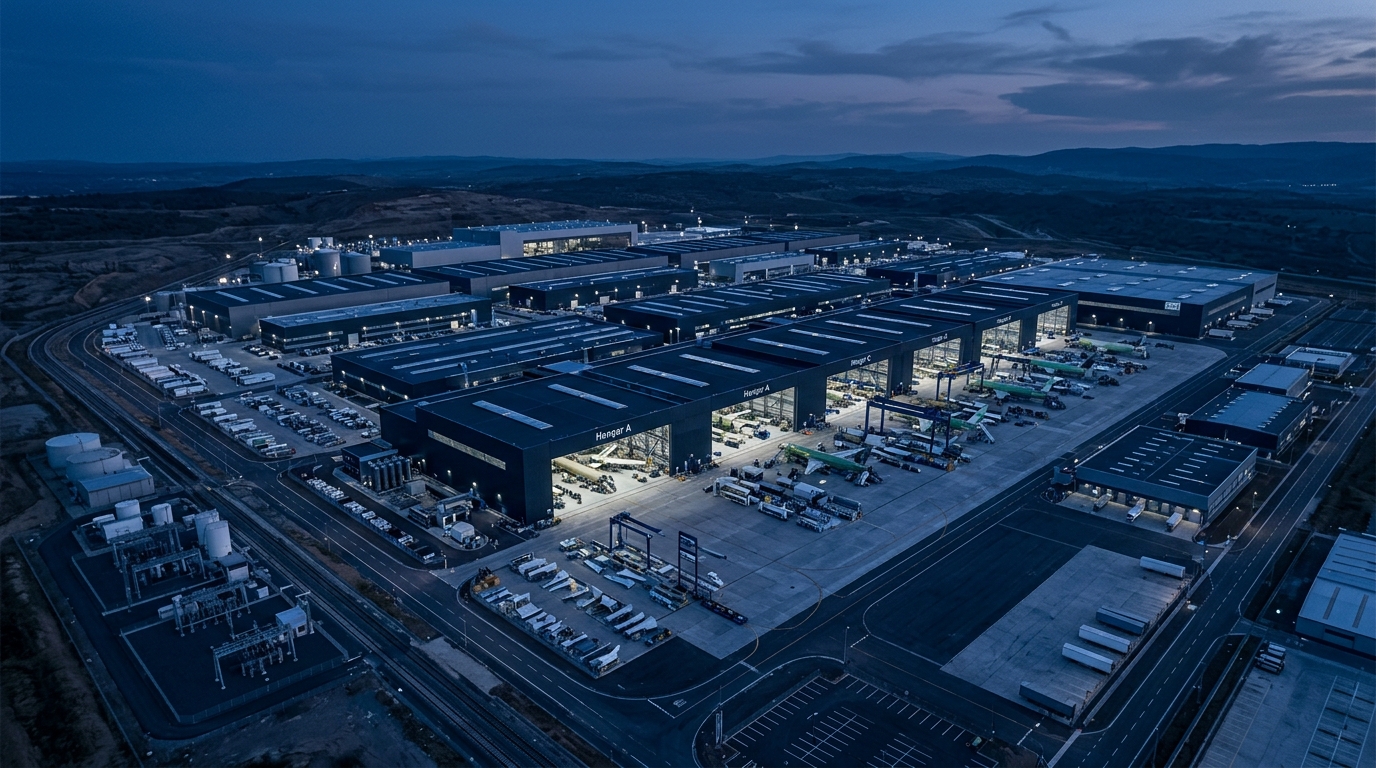
Aerial view of a major aerospace manufacturing facility representing the complex proposal management environment that the Virtual Proposal Center was built to serve

Before vs. After: Enterprise Workflow Automation Foundation

Enterprise workflow environments rarely fail all at once. They degrade gradually as manual processes expand, department-level automations multiply, and rules are embedded inconsistently across tools. Over time, visibility erodes, control weakens, and operational risk quietly accumulates.

The difference between “before” and “after” is not faster tasks. It is whether workflow automation is treated as enterprise execution infrastructure.

Before: Fragmented, Human-Dependent, and Risk-Exposed

  • Disconnected, tool-level workflows that cannot scale across the enterprise
  • Email- and spreadsheet-driven approvals with inconsistent decision paths
  • Little to no end-to-end visibility into how work moves across systems
  • Automation logic trapped in departments instead of governed centrally
  • Growing compliance, audit, and operational exposure

In this state, work technically moves, but leadership cannot see it, govern it, or confidently rely on it.

After: Governed, Orchestrated, and Built to Scale

  • A defined enterprise workflow and automation architecture
  • Standardized, rules-driven orchestration across systems and teams
  • Automated cross-system execution with embedded controls
  • Real-time visibility into process performance and risk points
  • Scalable foundations for compliance, operational resilience, and continuous optimization

The enterprise shifts from manual coordination to governed execution. Leadership gains control.

The Solution: Governed Workflow & Process Automation

Governed workflow and process automation establish automation as enterprise execution infrastructure – not a collection of task-level efficiencies. Instead of automating isolated steps within departments or tools, this solution defines how work moves across the organization with consistency, accountability, and control.

In many enterprises, automation emerges tactically: scripts, departmental flows, and tool- specific automations built to solve immediate problems. While these efforts can deliver short-term gains, they rarely scale. Over time, they introduce operational fragility, governance gaps, and technical debt that limit visibility and increase risk. Governed automation corrects this pattern by replacing ad hoc execution with an intentional, enterprise-wide automation model.

At its core, governed automation is about intent, structure, and control. Workflows are designed around business rules and decision logic rather than individual discretion. Execution becomes predictable. Oversight is built in. Automation strengthens governance instead of undermining it.

Automation Designed for Enterprise Reality

Enterprise automation must operate across teams, systems, and platforms without becoming brittle or opaque. Governed workflow automation introduces architectural discipline where informal processes once existed, allowing organizations to orchestrate work end-to-end while maintaining compliance and operational confidence.

This solution establishes:

  • Rules-driven orchestration: Business rules, approvals, and decision paths are defined centrally, ensuring consistent execution and reducing dependency on individual judgment.
  • Event-based execution: Workflows respond automatically to business events, enabling timely action, reduced delays, and proactive operations.
  • End-to-end visibility: Leaders gain real-time insight into workflow performance, bottlenecks, and risk points across systems and teams.
  • Governance by design: Auditability, policy enforcement, exception handling, and accountability are embedded directly into workflows rather than added after deployment.
  • Enterprise architecture alignment: Automation operates as a connected capability across platforms, preserving existing investments while supporting modernization and scale.

When workflow and process automation are treated as a governed enterprise capability, execution becomes reliable, auditable, and resilient. Leadership shifts from managing exceptions to managing outcomes. Teams gain consistency. The organization gains an automation foundation it can scale without increasing risk.

Where Enterprise Automation Delivers Measurable Impact

When workflow and process automation are applied as a governed, enterprise-wide capability, the operational outcomes are measurable – stronger decision-making, greater resilience, and reduced risk. Treating automation as a managed enterprise capability positions leadership to execute with confidence rather than absorb inefficiency.

Reduced Operational Risk

Structured, rules-driven automation reduces reliance on manual processes, fragmented workflows, and ad hoc task execution. Embedding governance, compliance, and exception handling into every workflow mitigates operational exposure and ensures regulatory requirements are met consistently. Risk is no longer a byproduct of growth because it becomes a managed aspect of enterprise operations.

Faster, Auditable Decision Cycles

Automated, event-driven workflows create real-time visibility into approvals, escalations, and task progression. Leaders can track decisions across departments and systems, ensuring that every action is auditable and traceable. This level of oversight transforms decision cycles from reactive to proactive, supporting faster, more confident enterprise-wide responses.

Scalable Execution Without Headcount Growth

Automation enables organizations to increase operational throughput without proportional increases in staffing. Standardized, repeatable workflows allow enterprises to scale across regions, business units, and functions while maintaining quality, compliance, and predictability.

Legacy Systems Enabled, Not Replaced

Intelligent automation bridges legacy and modern systems, allowing critical business processes to flow seamlessly without costly replacements. Enterprises preserve existing technology investments while modernizing execution.

Predictable, Repeatable Operations

When embedding AI-driven insights and workflow automation into processes, you can continuously monitor performance, anticipate bottlenecks, and optimize execution. Operations become repeatable, measurable, and aligned with strategic objectives, enabling continuous improvement and enterprise agility.

Through this approach, governed enterprise automation moves beyond task-level efficiency, establishing a reliable foundation for growth, compliance, and strategic advantage.

Clarify Your Enterprise Microsoft Solutions Direction

Fragmented Microsoft environments quietly erode scale, visibility, and governance. Enterprise Microsoft solutions built on integration, operating discipline, and platform alignment turn modernization complexity into predictable, defensible enterprise outcomes.

Enterprise Outcomes Enabled by Governed Workflow Automation

Enterprise workflow automation delivers measurable impact only when it is designed as a governed operating capability, not a collection of isolated task automations. When executed with discipline and architectural alignment, organizations consistently realize the following outcomes:

  • Scalable Execution Without Headcount Growth: Standardized, rules-driven workflows remove dependency on manual effort and individual knowledge. The enterprise gains the ability to increase operational capacity and throughput without proportional increases in staffing or overhead.
  • Faster, More Predictable Process Cycles: Automated orchestration replaces inbox-driven approvals and handoffs with real-time execution. Decisions move through the organization with speed and consistency, improving responsiveness while reducing operational friction.
  • Reduced Risk Through Built-In Controls and Auditability: Automation enforces policy, approval logic, and exception handling by design. Every action is logged, traceable, and reviewable, strengthening compliance, audit readiness, and accountability across regulated environments.
  • Lower Operating Costs Through Standardization: When eliminating rework and process variation, automation reduces the hidden costs embedded in manual execution. Operations become repeatable, efficient, and easier to manage at scale.
  • Improved Workforce Focus and Engagement: Removing low-value, repetitive work allows employees to concentrate on decision-making, analysis, and outcomes that directly support business objectives, improving productivity and long-term retention.
Team of diverse professionals collaborating on a project in a modern office.

These outcomes reflect what is possible when workflow automation is approached as a strategic enterprise capability, guided by governance, clarity, and informed decision-making. Organizations that act early establish a stronger operational foundation for modernization, while those that delay often carry forward inefficiencies that become harder and more expensive to correct over time.

Enterprise Workflow Automation Across Microsoft Platforms

i3solutions delivers enterprise workflow and process automation across the Microsoft ecosystem by designing automation as a governed execution layer that spans applications, data, identity, and operations. Our Microsoft-aligned automation solutions connect people, systems, and decision logic into secure, auditable workflows that operate reliably at enterprise scale.

Rather than building isolated flows inside individual tools, we architect automation across the Microsoft cloud to ensure consistency, visibility, and control across business units, platforms, and environments.

Our enterprise automation capabilities across Microsoft include:

This positions Microsoft not just as the toolset, but as the enterprise control surface your automation operates on.

Automation Use Cases at the Enterprise Level

Enterprise automation delivers measurable impact when applied across core operational functions, not isolated departmental workflows. Focusing on high-value processes that span teams and systems improves throughput, reduces risk, and drives predictable outcomes across the business.

  • Workforce Lifecycle Automation: From onboarding to offboarding and role transitions, governed automation ensures that workforce processes are consistent, compliant, and auditable. Knowledge management systems are integrated to capture critical process knowledge, reducing reliance on individuals and supporting operational continuity.
  • Financial Governance Workflows: Rules-driven automation ensures that approvals, reconciliations, and financial transactions adhere to enterprise standards. Systems are integrated seamlessly to maintain accuracy across legacy and modern platforms, reducing errors and supporting regulatory compliance.
  • Compliance and Audit Orchestration: Automated monitoring, reporting, and exception handling enforce governance and provide real-time audit trails. Event-driven workflows ensure that risk and compliance checks are executed consistently across the enterprise, strengthening accountability and decision-making.
  • Cross-System Operational Routing: Automation orchestrates work across multiple systems and applications, connecting processes that span legacy and cloud platforms. This reduces manual handoffs and ensures seamless execution enterprise-wide.
  • Leadership Visibility and Reporting: Executives gain actionable insights through automated dashboards and reports. AI-driven analytics and workflow automation transform operational data into decision-ready intelligence, supporting strategy, customer service automation improvements, and proactive business planning.
Business team reviewing data on tablet for digital solutions.

When you focus on these themes, your enterprise automation becomes a strategic capability, enabling your organization to operate at scale and continuously optimize your operations across systems.

How i3solutions Enables Enterprise Automation

IT solutions for business efficiency and digital transformation.

Enterprise automation succeeds when it is process-first, decision-driven, and strategically aligned, not dictated by a single platform. Our business process automation consulting focuses on enabling governance, scale, and measurable outcomes, while remaining platform-agnostic and outcome-oriented.

  • Process-First, Not Tool-First: Automation is applied only where it drives real enterprise impact. Workflows are optimized before any technology is introduced, avoiding fragmented implementations and maximizing value.
  • Decision Gating Before Automation: Every workflow passes governance and strategic checkpoints to ensure it reduces risk, enhances compliance, and supports enterprise objectives.
  • Platform-Agnostic Orchestration: Designed to operate across systems, applications, and environments, automation adapts to evolving technology landscapes and integrates with legacy systems without costly rework.
  • Regulated-Enterprise Experience: Workflows enforce compliance, maintain auditability, and embed governance directly into processes, ensuring operational risk is minimized in highly regulated environments.
  • Aligned to Digital Transformation: Automation complements your broader modernization roadmap, using technologies like Azure for cloud orchestration, Microsoft Copilot for AI-driven assistance, Microsoft Integration for system connectivity, and Dataverse and Entra ID for secure data and identity management.

Combining governance and enterprise-grade strategy, i3solutions ensures automation delivers predictable outcomes without being limited by specific tools.

Who This Solution Is Designed For

This solution is designed for enterprise organizations that:

  • Operate across multiple systems, teams, or regulated environments
  • Depend on workflow automation for mission-critical processes
  • Require auditability, governance, and execution consistency
  • Are standardizing automation across Microsoft platforms
  • Are modernizing legacy processes into scalable automation environments

This solution is not designed for:

  • Teams looking for basic task automation without enterprise-scale requirements
  • Single-use automations without integration or governance requirements
  • Low-complexity tasks that don’t require governance, compliance, or system integration
  • Organizations without enterprise integration or governance needs

When Workflow Automation Is (and Is Not) the Right Solution

Automation is a powerful lever for enterprises, but only when applied strategically. Understanding when to act and when to wait prevents wasted effort, governance gaps, and unintended operational risk.

Signals Automation Is Ready

  • High-volume, repetitive processes with clearly defined rules and outcomes.
  • Cross-system workflows where integrations can reduce manual handoffs and errors.
  • Processes with measurable KPIs that allow leaders to track improvements and ROI.
  • Alignment with digital transformation roadmaps, ensuring automation complements broader modernization initiatives.

Signals Automation Should Be Delayed

  • Processes are poorly defined, inconsistent, or subject to frequent manual exceptions.
  • Governance, compliance, or risk controls are immature or undocumented, increasing exposure if automation is applied prematurely.
  • Critical dependencies exist on legacy systems or isolated knowledge that have not been integrated or standardized.

Common Failure Patterns

  • Siloed automation that operates within a single department without enterprise-wide integration or governance
  • Brittle workflows built on manual workarounds or undocumented logic that break under scale or change
  • Over-reliance on individual tools or departments, creating complexity instead of reducing it
  • Lack of operational visibility, reducing leadership confidence in decision-making and audit readiness
  • Automation layered on top of poorly defined processes, compounding inefficiency rather than eliminating it

As a trusted Microsoft integration company, i3solutions assesses readiness, identifies automation opportunities, and embeds governance and architecture alignment from the start – delivering measurable, enterprise-grade impact rather than adding risk to your operations.

Why Choose i3solutions for Enterprise Workflow & Process Automation

i3solutions is brought in when automation must operate as governed enterprise infrastructure – reliable across business units, defensible in audits, and safe to change as systems and policies evolve. We design workflow automation around the realities that break enterprise programs: cross-system dependencies, inconsistent approval logic, unclear ownership, and flow sprawl that becomes invisible operational risk.

What enterprises value in the i3solutions approach:

  • Senior-led automation architecture and standards that prevent duplicated logic and brittle dependencies
  • Clear ownership and operating model for automation across teams, environments, and business units
  • Audit-ready traceability by design (approvals, exceptions, logging, accountability)
  • Change control that protects production when rules, integrations, or org structures shift
  • Measured performance and visibility into bottlenecks, failure points, and process risk

The result is automation leadership can govern, trust, and scale – without trading speed for control.

Proven Enterprise Outcomes & Practical Insight

Real-world case studies and expert perspectives showing how organizations operationalize Microsoft platforms with governance, scale, and confidence.

Excel-to-Web App Analyzer

Our instant analyzer scans your Excel file for hidden complexity, manual inefficiencies, and fragile formulas – then generates an executive-level modernization assessment that identifies risks, effort, and the optimal path to a secure, scalable web solution.

Ideal for technology leaders evaluating how to modernize Excel-based workflows and eliminate manual, error-prone processes.

Excel-to-Web App Analyzer

Our instant analyzer scans your Excel file for hidden complexity, manual inefficiencies, and fragile formulas – then generates an executive-level modernization assessment that identifies risks, effort, and the optimal path to a secure, scalable web solution.

FEATURED BLOG

Alternatives to InfoPath: How Enterprises Are Moving to Power Apps

FEATURED BLOG

5 Signs It’s Time to Replace Your Excel Spreadsheets With a Web-Based Solution

FEATURED BLOG

Maximizing ROI From Power Platform and Dynamics 365 Integration

Frequently Asked Questions

We prioritize based on complexity, volume, error rates, and measurable ROI. This ensures you get quick wins early while building a scalable automation roadmap.

Yes, our team regularly integrates with legacy, on-prem, and proprietary platforms. We use APIs, connectors, RPA, and custom orchestration to bridge systems without disruption.

Simple workflows can be delivered in a few weeks, while multi-department automations may take several months. We provide a clear timeline after discovery so expectations are aligned from the start.

Yes, but maintenance is minimal when workflows are designed properly. We offer monitoring and support options to ensure your automations remain accurate and up to date as your processes evolve.

Automation is designed to remove repetitive, low-value tasks and not eliminate roles. Most teams shift toward higher-value work such as analysis, decision-making, and customer engagement.

We design automation with governance built in. Approval logic, access controls, audit trails, exception handling, and ownership models are embedded directly into workflows. This ensures automated execution aligns with enterprise policies, regulatory requirements, and security standards rather than bypassing them.

Our automation frameworks are built to evolve. Rules are centralized, workflows are modular, and integrations are architecture-aligned, allowing changes to be implemented without breaking downstream processes. This makes it possible to adapt safely to new systems, organizational changes, or compliance requirements without rebuilding automation from scratch.