CONTACT US

Custom Application Solutions

ENTERPRISE Custom Application Solutions

Designing Application Capabilities That Enable Enterprise Change

In fragmented, legacy-constrained Microsoft enterprise environments, applications stop being enablers of change and instead become constraints on growth, compliance, and innovation. The real challenge is restoring the organization’s ability to change with confidence through intentional, outcome-driven custom application solutions.

This includes modernizing existing applications and designing/building new enterprise-grade custom applications when packaged platforms and low-code tools cannot meet operational, integration, or compliance requirements. In both cases, the goal is the same: deliver governed application capabilities that integrate cleanly into your Microsoft environment and remain secure, auditable, and maintainable as the organization scales.

When approached strategically, enterprise custom applications re-establish control over how work flows, how data is operationalized, and how change is delivered – aligning application design to operating models, governance requirements, and long-term enterprise architecture.

Establish Enterprise Application Control

Align your application strategy to enterprise priorities and Microsoft platforms so your environment can scale, modernize, and adapt without increasing risk. Establish the architectural and governance foundations required for predictable, enterprise-grade change.

What Enterprise Custom Application Solutions Enable

In many Microsoft enterprise environments, years of platform adoption, legacy preservation, and tactical builds create application landscapes that quietly constrain execution. Change becomes slow. Data becomes fragmented. Governance becomes reactive. Applications exist, but they no longer reliably support how the enterprise needs to operate.

Enterprise custom application solutions address this condition by restoring intentional control over how applications function across the organization. When approached strategically, they re- establish how work flows, how data is operationalized, and how change is delivered, aligning application design to operating models, governance requirements, and long-term enterprise architecture.

Our approach focuses on the outcomes enterprises need, not individual systems:

  • Modernized processes that reduce friction and manual overhead
  • Unified, reliable data across core platforms
  • Governed integration across the Microsoft ecosystem
  • New mission-critical applications built on Microsoft platforms when off-the-shelf solutions don’t fit
  • Applications that scale securely and remain audit-ready as the organization grows

For CIOs and CTOs, success is measured in more than delivery. It is measured in reduced risk, predictable change, architectural alignment, and the ability to support business strategy without accumulating new technical debt.

We help enterprise leaders design application foundations that support today’s priorities while remaining flexible enough to adapt to what comes next. And where the enterprise needs a new capability – not another point solution – we design and build applications that inherit governance by default and integrate cleanly into the ecosystem.

The Role of Custom Applications in the Enterprise Stack

Custom applications operate at the intersection of business operations, data, and enterprise platforms. At enterprise scale, they form the execution layer where workflows run, governance is enforced, and modernization becomes real. They are the connective layer between packaged systems, legacy platforms, and modern cloud services – where workflows are executed, data is operationalized, and governance becomes real.

In mature enterprises, custom applications are not isolated builds. They operate within a broader enterprise stack that includes:

  • Core business platforms (ERP, CRM, industry systems)
  • Enterprise data and analytics foundations
  • Identity, security, and compliance controls
  • Integration and automation layers
  • Governance and architectural standards

This solution addresses that middle layer: designing and governing application capabilities so they integrate cleanly into the enterprise ecosystem, inherit security and compliance by default, and remain adaptable as strategy, scale, and regulatory demands evolve.

Business professional working on cloud computing and data security on desktop.

Rather than adding more systems, this work reshapes how applications function across the enterprise – turning them into a governed capability instead of a growing liability.

Where Enterprise Application Environments Break Down

As organizations scale, their application environments rarely evolve by design. New platforms are introduced to solve immediate problems, legacy systems remain in place to avoid disruption, and integrations are added incrementally to keep everything connected. Over time, this results in an application landscape that is difficult to change, expensive to operate, and increasingly misaligned with how the business needs to function.

What begins as a collection of useful systems becomes a structural constraint on execution.

At an enterprise level, the challenge is not any single application. It is the cumulative impact of fragmented systems on agility, governance, and decision-making. The constraints enterprises face today:

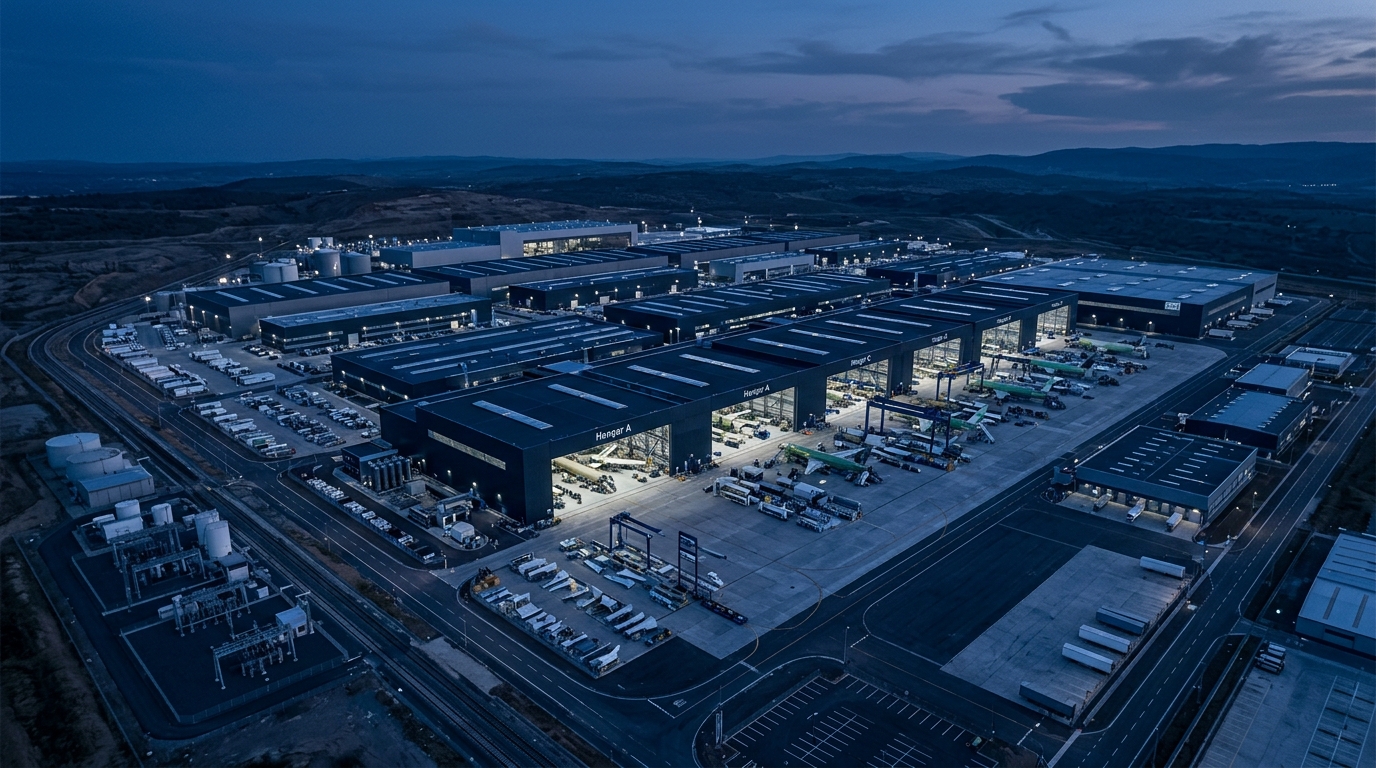
Aerial view of a major aerospace manufacturing facility representing the complex proposal management environment that the Virtual Proposal Center was built to serve

The impact on enterprise outcomes

When application environments are not intentionally designed for scale and governance, the consequences extend beyond IT:

  • Strategy execution slows as systems cannot adapt at the speed the business requires
  • Operational costs rise due to maintenance-heavy environments and duplicated effort
  • Risk exposure increases through security gaps, audit challenges, and fragile integrations
  • Decision velocity declines as leaders lack timely, reliable insight across the organization

At this stage, incremental fixes are no longer enough. Enterprises need to rethink how applications support the organization as a whole, evolving from isolated systems into a governed capability that drives continuous business process improvement.

Business professionals in a meeting discussing strategies at i3solutions.

Before vs. After: Enterprise Application Environments

Enterprise application environments don’t fail overnight. They drift, gradually accumulating fragmentation, risk, and complexity until change becomes slow and uncertain. This shift is often invisible until the organization reaches a point where strategy outpaces systems.

Custom application solutions, when designed at an enterprise level, enable a fundamental transition: from reactive system management to a governed, scalable capability that supports continuous change.

Before: Fragmented, Reactive, and High-Risk

  • Applications are introduced to solve isolated problems, with limited architectural alignment
  • Data is fragmented across platforms, reducing trust and slowing decisions
  • Integrations are brittle, costly to maintain, and difficult to scale
  • Governance is reactive, layered on after delivery rather than embedded
  • Delivery slows as technical debt accumulates and risk increases

IT teams spend most of their time managing complexity, while business leaders struggle to execute change at the pace strategy demands.

After: Unified, Governed, Enterprise Intelligence

  • Applications are aligned to business capabilities and strategic priorities
  • Data flows consistently across platforms, enabling reliable insight and decision-making
  • Integration is treated as an enterprise capability, not a project-by-project concern
  • Security, compliance, and auditability are embedded by design
  • Change is delivered incrementally and predictably without destabilising the environment

IT becomes a trusted enabler of enterprise execution, providing the confidence to modernize, scale, and innovate without introducing new risk.

Business Outcomes & Value of Custom Application Solutions

Enterprise custom application initiatives must deliver more than working systems. They must reduce risk, restore execution velocity, and establish application capabilities that scale without increasing complexity. Partnering with a Microsoft-focused systems integration company like i3solutions ensures enterprise application ecosystems are architected for strategic alignment, operational resilience, and long-term governance.

Predictable change and faster execution

Modular, Microsoft-aligned application architectures enable new capabilities to be introduced, updated, and scaled without destabilizing the environment. This allows the enterprise to move faster while maintaining architectural integrity, security, and delivery confidence.

Operational efficiency with governance built in

Integrated workflows, system orchestration, and governed data flows reduce manual effort, rework, and process inconsistency. Teams operate from connected systems with shared logic and controls, improving execution speed without increasing operational risk.

Lower long-term cost and reduced technical debt

Applications designed for maintainability, integration, and platform alignment reduce dependency on brittle point solutions and one-off builds. This lowers support burden, simplifies modernization, and prevents the compounding cost of unmanaged technical debt.

Enterprise agility without loss of control

Cloud-enabled, Microsoft-aligned solutions allow the organization to respond to regulatory change, growth, and new business models without repeated architectural resets. The application environment evolves as strategy evolves.

Consistent employee and customer experiences

Applications are designed around real operating models and integrated across platforms, reducing duplication, workarounds, and friction. Employees work within coherent systems, and customers experience reliable, end-to-end processes.

Business outcomes leadership can govern

Every initiative is aligned to enterprise objectives with defined success measures, architectural accountability, and lifecycle ownership. Leaders gain visibility into value creation, risk posture, and portfolio health, not just project delivery.

Aerial view of a major aerospace manufacturing facility representing the complex proposal management environment that the Virtual Proposal Center was built to serve

Most enterprises recognize the need to modernize and rationalize their application environments. Where they struggle is execution.

Internally, application teams are optimized for delivery, not transformation. They are accountable for supporting production systems, meeting near-term business demands, and keeping environments running. That reality leaves little capacity for enterprise-level architecture work, cross-platform integration design, governance modeling, or long-horizon modernization programs. Application change becomes incremental and reactive, reinforcing the very complexity organizations are trying to escape.

General development firms introduce a different risk. They are structured to deliver projects, not to steward enterprise application ecosystems. Their incentives favor building new solutions quickly, often without deep accountability for long-term architectural integrity, governance alignment, or platform cohesion. This frequently results in technically successful deployments that increase fragmentation, introduce hidden compliance exposure, and add to the organization’s technical debt portfolio.

The gap is not coding capability. The gap is enterprise application ownership. Enterprises need partners who can operate at the intersection of:

  • business operating models
  • enterprise architecture
  • governance and compliance
  • platform ecosystems
  • and hands-on implementation

Without that combined perspective, application initiatives solve local problems while weakening the enterprise environment over time.

This is where most programs stall, drift, or quietly fail.

The Solution: Governed Enterprise Application Capabilities

Our custom application approach is designed to address a core enterprise need: the ability to change, scale, and modernize without increasing risk or complexity.

Rather than treating applications as isolated delivery efforts, we help organizations design, build, and modernize application capabilities within a cohesive model that supports strategy execution, governance, and long-term architectural integrity. The focus is not on delivering more disconnected systems, but on establishing governed application capabilities that improve how the organization operates and evolves.

The enterprise outcomes we create:

Applications aligned to business strategy

Application initiatives are explicitly tied to strategic priorities such as growth, operational efficiency, customer experience, and risk reduction. This ensures technology investment is directed toward measurable business outcomes rather than disconnected projects. Leaders gain clarity on where applications create value and where simplification or modernization is required.

A predictable, scalable model for change

We enable application environments that can evolve incrementally without disruption. Modular, loosely coupled architectures allow new capabilities to be introduced, updated, or retired without destabilizing the broader ecosystem. This reduces delivery risk and gives IT leaders confidence that the environment can scale with organizational demand.

Governance embedded by design

Security, compliance, and control are built into the application foundation rather than added reactively. Identity, access, data protection, and auditability are consistently applied across the application estate, supporting regulatory obligations and internal governance standards as the organization grows.

Unified data and integrated processes

Applications are designed to work as part of an integrated ecosystem, enabling consistent data flow and end-to-end processes across platforms. This reduces fragmentation, improves data trust, and supports faster, more informed decision-making at every level of the organization.

Reduced complexity and technical debt over time

Intentional architecture and clear design standards prevent the accumulation of fragile integrations and one-off solutions. Over time, this lowers the total cost of ownership, simplifies ongoing change, and creates a more sustainable application landscape.

Enterprise Leadership Impact

For CIOs and CTOs, this approach delivers more than functional applications:

  • Lower operational and delivery risk
  • Stronger alignment with enterprise and Microsoft reference architectures
  • Improved audit readiness and compliance confidence
  • Clearer visibility into application value and lifecycle

The result is an application estate that operates as a strategic asset that supports innovation, absorbs change, and enables the organization to move forward with confidence.

Validate Your Application Delivery Path

A strong application foundation enables faster delivery, easier change, and better outcomes over time. Start with an approach designed for enterprise scale and complexity.

Enterprise Application Services

The strategic outcomes described above are delivered through a set of services designed to help enterprises move from constrained application environments to governed, scalable platforms for change. Each service can be engaged as a focused initiative, but we structure the work so it connects to your target architecture, operating model, and governance expectations – preventing isolated delivery that increases fragmentation or technical debt.

Depending on the need, this includes designing and building new mission-critical applications, modernizing existing systems, and establishing the integration and governance patterns that make both sustainable. The goal is consistent: strengthen the enterprise application ecosystem while improving delivery speed, control, and long-term maintainability.

How we enable transformation across the application lifecycle:

Common Enterprise Application Scenarios We Support

Team collaboration at i3solutions office for innovative IT solutions.

These are common scenarios where enterprises engage us to design, build, and modernize governed application capabilities across Microsoft environments.

  • Replace Spreadsheet, email, and SharePoint workaround processes with governed applications
  • Build new mission-critical capabilities when packaged platforms and low-code tools don’t fit
  • Modernize legacy internal applications to Azure with phased cutover and continuity controls
  • Connect ERP, CRM, SharePoint, Dataverse, and line-of-business systems into end-to-end workflows
  • Standardize integration patterns (APIs, events, data contracts) across business units to reduce brittleness
  • Implement audit-ready approvals and workflow traceability aligned to security and compliance requirements
  • Consolidate duplicate applications into shared capabilities with clear ownership and lifecycle management

Designed for Enterprise Scale and Governance

Enterprise application initiatives only succeed when they reinforce the overall environment instead of adding another isolated system. Every service is delivered through enterprise controls that protect architectural integrity, reduce risk, and ensure long-term sustainability across Microsoft environments.

Across all custom application services, we enforce:

Alignment with enterprise and Microsoft architecture standards

Application designs are anchored to enterprise reference architectures, integration patterns, and Microsoft platform standards to prevent fragmentation and ensure long-term cohesion.

Security, compliance, and auditability by design

Identity, access, data protection, and logging are embedded from the start, supporting regulatory requirements and audit readiness without retrofitting controls later.

Clear ownership and lifecycle management

Every application is designed with defined accountability, support models, and modernization paths to prevent orphaned systems and unmanaged sprawl.

Enterprise Application Ecosystems on Microsoft Platforms

Enterprise application outcomes depend on more than individual systems, as they require technology foundations that support consistent governance, secure integration, and controlled evolution over time.

Our custom application solutions are designed to operate within enterprise-grade platform ecosystems, enabling organizations to modernize and scale without sacrificing architectural integrity or increasing operational risk. Technology choices are guided by business requirements, regulatory obligations, and long-term strategy – while staying aligned to Microsoft reference architectures. We use these platforms to deliver new application capabilities and modernize legacy workloads without breaking identity controls, data standards, or audit requirements.
Outcome-focused platform enablement

Advanced data analytics interface showing real-time insights and trends.

Alignment with Microsoft enterprise architecture

As a Microsoft-focused systems integrator, we architect enterprise application ecosystems aligned to Microsoft reference architectures, security models, and governance frameworks.This enables organizations to maximize the value of their Microsoft investments while maintaining architectural consistency.

Modern workspace with laptops and digital devices for business efficiency.

A unified, governed application foundation

We help enterprises establish application environments where identity, data, and access are consistently governed across platforms. This reduces fragmentation, improves security posture, and simplifies compliance and audit readiness as the application estate grows.

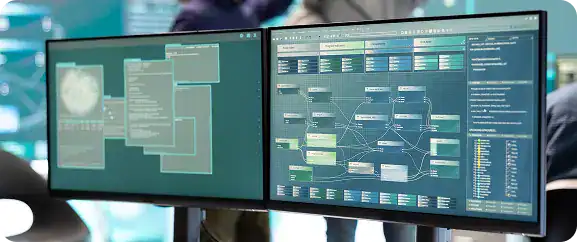
Dual monitor setup displaying network management and cybersecurity dashboards.

Integrated ecosystems, not isolated platforms

Applications are designed to operate as part of a connected ecosystem, enabling reliable data flow and end-to-end processes across core business systems. This integration-first approach supports operational clarity, reduces manual work, and improves decision velocity across the organization.

Software developer working on code at i3solutions office.

Microsoft Platforms with Enterprise Integration

We architect solutions to maximize your Microsoft investments while integrating cleanly with the systems you already depend on – ERP, industry platforms, data services, and third-party tools. The result is a Microsoft-aligned application foundation that supports hybrid realities without creating unnecessary lock-in or brittle, one-off integrations.

Enterprise platforms we commonly enable

We enable enterprise application ecosystems built on leading cloud and business platforms, including:

  • Microsoft Azure and the broader Microsoft application ecosystem
  • Other major cloud platforms to support global scale and specialized workloads
  • Enterprise SaaS platforms integrated into end-to-end business processes

These platforms are used as foundations, not constraints, enabling you to scale, be more resilient, and have future adaptability.

Technology as a strategic enabler
Rather than focusing on individual tools or features, our solutions ensure that:

  • Architecture decisions reinforce governance and security
  • Platforms support consistent delivery and change
  • Application ecosystems remain understandable, supportable, and auditable

The result is a technology landscape that enables enterprise transformation with confidence, rather than introducing additional complexity.

How We Reduce Enterprise Delivery Risk

Enterprise application initiatives fail not because of technology, but because delivery lacks structure, visibility, and governance at scale. Our delivery model is designed to reduce risk, maintain architectural integrity, and ensure application initiatives deliver measurable business outcomes.

Rather than applying a one-size-fits-all approach, we align delivery structures to your organization’s maturity, operating model, and strategic priorities, while maintaining consistent governance and executive oversight.

How we ensure reliable enterprise outcomes

Aerial view of a major aerospace manufacturing facility representing the complex proposal management environment that the Virtual Proposal Center was built to serve

Drive Consistency Across Every Initiative

Ensure your custom applications are delivered on time, on budget, and aligned to enterprise priorities across Microsoft platforms. We structure programs that are transparent, efficient, and measurable.

Who This Solution Is Designed For

Enterprise custom application initiatives succeed only when there is executive ownership, architectural intent, and operational consequence. These solutions are designed for organizations where applications are not just delivery assets, but enterprise infrastructure that directly affects risk, execution, and the ability to change with confidence.

This solution is designed for enterprise organizations that:

  • Operate complex, multi-system application environments across business units
  • Depend on custom and legacy applications to run mission-critical operations
  • Need new, mission-critical applications where packaged tools cannot meet requirements
  • Are experiencing delivery slowdowns, rising technical debt, or modernization risk
  • Require governed application design aligned to security, compliance, and audit standards
  • Are standardizing on Microsoft platforms and need enterprise-grade application architecture
  • Are preparing their application ecosystem for automation, analytics, and AI initiatives

This Solution Is Not Designed For:

  • Teams seeking rapid, standalone app builds without enterprise architecture, governance, or lifecycle ownership
  • Staff augmentation limited to task execution without architectural accountability or governance alignment
  • Initiatives where governance, security, and long-term maintainability are not required constraints
  • One-off builds focused on speed over long-term accountability, governance, and maintainability

A Trusted Partner for Enterprise Application Transformation

Team of three smiling colleagues standing together in a contemporary workspace.

Custom application solutions demand more than technical delivery. They require a partner that understands how application decisions affect risk, governance, and long-term enterprise architecture.

i3solutions acts as architectural and delivery stewards across complex, regulated environments – guiding how application capabilities evolve, integrate, and remain governed over time. Our focus is on aligning application initiatives to business strategy while maintaining architectural discipline and control.

What sets us apart:

  • Governance and risk by design: Security, compliance, and auditability are embedded throughout the application lifecycle. Governance is consistently enforced across custom solutions and Microsoft platforms such as Dynamics 365 and Power Platform, enabling environments that scale with confidence.
  • Architectural stewardship: Every initiative is aligned with enterprise and Microsoft reference architectures, ensuring coherence across application, data, and integration layers. This includes structured use of platforms like Microsoft Fabric for analytics and data foundations, preventing fragmentation as capabilities expand.
  • Long-term partnership: Beyond individual initiatives, we support the ongoing evolution of enterprise application capabilities and adoption as business priorities evolve. Automation through Power Automate, insight through Power BI, and embedded experiences in Microsoft Teams help applications remain relevant and valuable within day-to-day operations.
  • Predictable, measurable outcomes: Clear accountability and outcome-focused governance provide executive leaders with confidence in delivery and value. Integrated analytics and reporting enable visibility into performance, usage, and ROI, supporting informed decision-making and ongoing optimization.

Proven Enterprise Outcomes & Practical Insight

Real-world case studies and expert perspectives showing how organizations operationalize Microsoft platforms with governance, scale, and confidence.

Excel-to-Web App Analyzer

Our instant analyzer scans your Excel file for hidden complexity, manual inefficiencies, and fragile formulas – then generates an executive-level modernization assessment that identifies risks, effort, and the optimal path to a secure, scalable web solution.

Ideal for technology leaders evaluating how to modernize Excel-based workflows and eliminate manual, error-prone processes.

Excel-to-Web App Analyzer

Our instant analyzer scans your Excel file for hidden complexity, manual inefficiencies, and fragile formulas – then generates an executive-level modernization assessment that identifies risks, effort, and the optimal path to a secure, scalable web solution.

FEATURED BLOG

Alternatives to InfoPath: How Enterprises Are Moving to Power Apps

FEATURED BLOG

5 Signs It’s Time to Replace Your Excel Spreadsheets With a Web-Based Solution

FEATURED BLOG

Maximizing ROI From Power Platform and Dynamics 365 Integration

Frequently Asked Questions

We do both. When packaged platforms and low-code tools cannot meet requirements, we design and build new enterprise-grade applications on Microsoft platforms, aligned to your target architecture, security model, and operating controls. We also modernize and rationalize existing applications so the overall ecosystem becomes governed, scalable, and easier to change.

We design applications with modular architectures, API-first frameworks, and cloud-native technologies, ensuring that components can be updated or expanded without major disruptions. This approach allows your applications to support new features, higher user volumes, and evolving business needs over time.

We design solutions around Microsoft reference architectures and your enterprise standards. Implementation commonly uses Azure services, .NET application patterns, and SQL/data platforms, with integration patterns that support auditability, security, and long-term maintainability.

Yes. We specialize in integrating applications across diverse ecosystems, including Microsoft platforms like Azure, Dataverse, and SharePoint, as well as third-party systems such as Salesforce or other ERP and CRM solutions. This ensures seamless data flow and consistent business processes.

Security and compliance are embedded from the earliest stages of design and development. We implement robust identity and access management, data encryption, monitoring, and audit-ready controls aligned with industry standards and regulatory requirements. Taking a proactive approach lets us minimize the risk, ensure your data integrity, and enable your organisation to maintain compliance as applications evolve and scale.

Success is measured using clearly defined KPIs tied to business outcomes, such as process efficiency, adoption rates, user satisfaction, and return on investment. We also track technical metrics like system performance, uptime, and scalability to ensure the solution delivers sustainable value.

Absolutely. We use a phased, low-risk approach to modernize legacy systems, refactor components, and migrate workloads to modern platforms. This minimizes disruption, reduces risk, and allows your organization to realize incremental value while retaining critical functionality.