Case Study · Research / Policy
Proposals on Hard Drives, No Version Control: How the research organization Built a SharePoint Proposal Management System
Client: the research organization (the research organization)

The Enterprise Challenge
The the research organization (the research organization) is one of the largest behavioral and social science research organizations in the world, dedicated to using rigorous scientific methods to address educational, social, and workforce challenges. Research proposals are the lifeblood of the research organization’s work, they secure the funding that enables studies, programs, and evaluations that influence policy and practice nationally. The quality, consistency, and efficiency of the research organization’s proposal process directly affects the organization’s research portfolio and revenue.
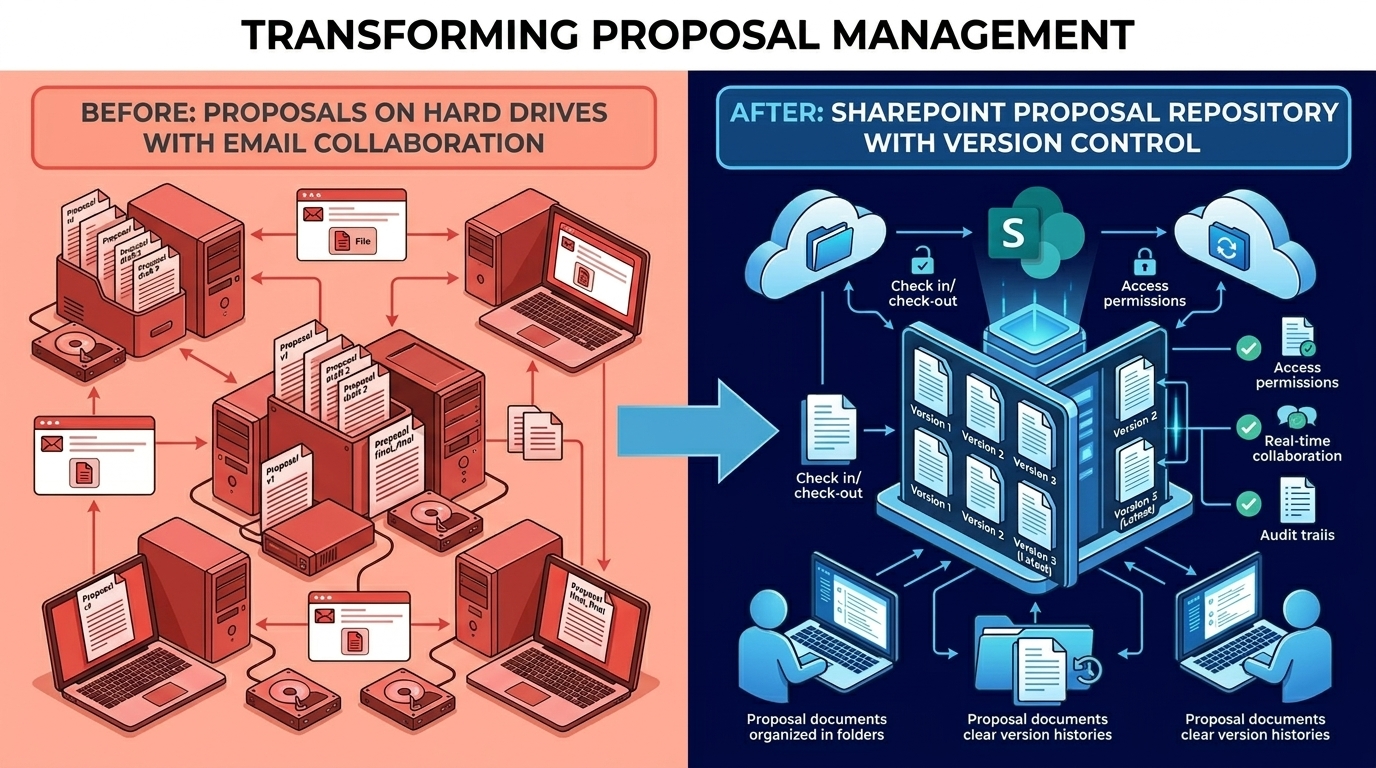
The proposal process was running on infrastructure that undermined those goals. Proposal materials were stored on individual team members’ hard drives, accessible to their authors but not to the broader team. Collaboration happened through email chains that were difficult to track and impossible to search. There was no version control, meaning multiple versions of the same document would circulate simultaneously without clarity about which was current. Past performance records, boilerplate capability statements, and institutional reference materials were not organized in a searchable central repository.
The Strategic Trigger
the research organization needed a proposal management platform that would consolidate all proposal materials into a searchable central repository, establish version control across all proposal documents, enable structured team collaboration without email chains, and give proposal managers visibility into which proposals were in progress and at what stage, without adding administrative overhead that would slow the proposal development process.
The Engagement Approach
Strategic Trigger
Conflicting proposal versions threatened critical research funding awards
The the research organization (the research organization) faced a critical inflection point in their proposal development lifecycle. For years, massive research proposals, some spanning hundreds of pages with complex budgets and data analyses, were authored and stored locally on individual staff hard drives. This decentralized approach led to an untenable situation where multiple “final” versions of a single proposal would coexist among different team members. The inevitable result was confusion, version conflict, and several near-misses where incorrect, outdated, or incomplete proposal sections were almost submitted to federal clients, which would have automatically disqualified the research organization from high-value research grants.
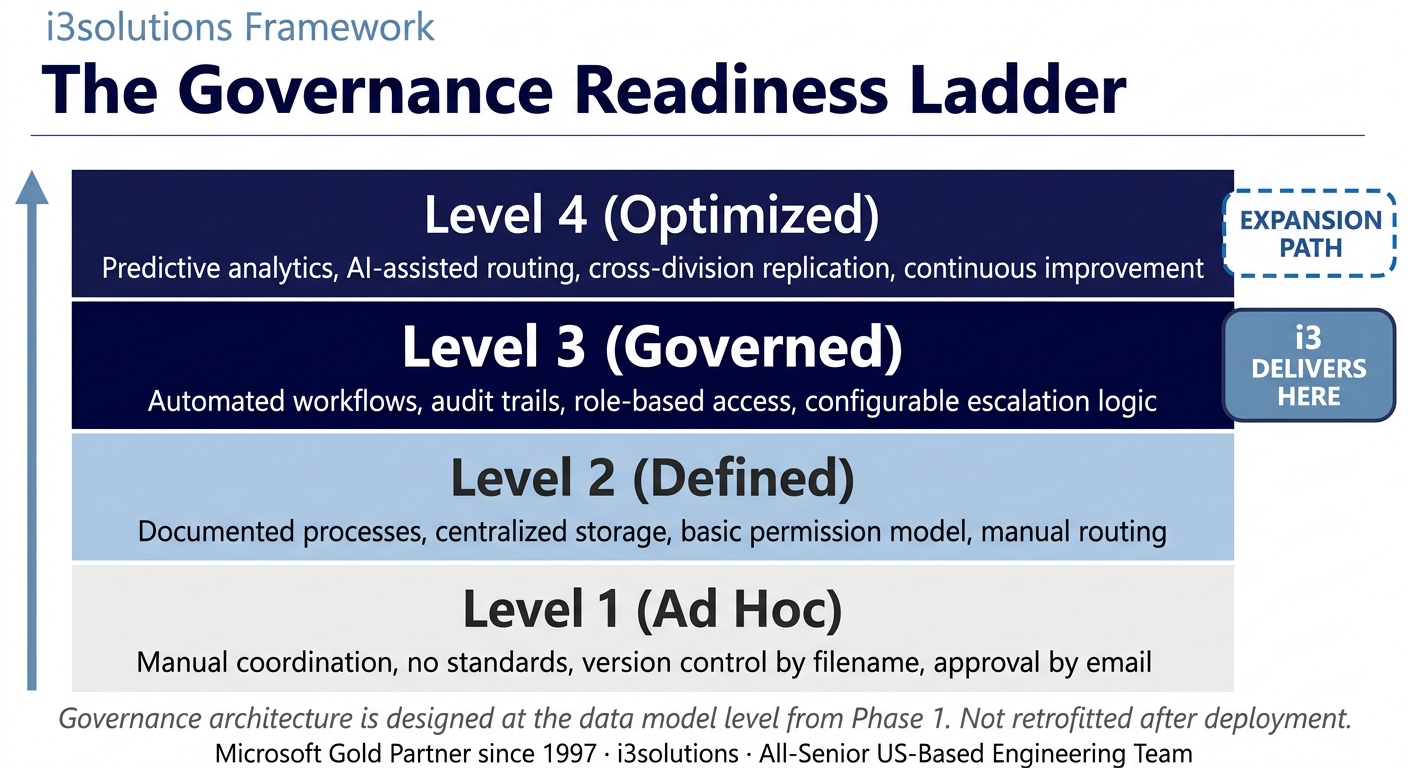
Recognizing that the manual process of emailing documents and tracking changes via file naming conventions was failing, the research organization leadership acknowledged the systemic risk. The status quo was no longer sustainable; it endangered not only current funding opportunities but also the institution’s long-standing reputation for rigor. They committed to a digital transformation of their proposal development pipeline, realizing they needed a robust, centralized collaborative environment. The primary mandate was to eliminate siloed work and implement absolute version control, ensuring that the “single source of truth” for any active proposal was always accessible, secure, and verifiable.
Stakes
Multi-million dollar federal grant disqualification from administrative errors
The immediate financial and operational stakes of continuing with the hard-drive-based system were severe. the research organization competes for massive, multi-year federal research grants where the evaluation process is rigorous and unforgiving. A single administrative error, such as submitting a preliminary budget draft or an unsigned certification page from an outdated version, would lead to immediate disqualification. The financial impact of losing even one major contract due to versioning errors could be measured in the millions of dollars, threatening research initiatives and specialized staff positions dependent on that specific funding stream.
Beyond the immediate financial loss, the reputational risk posed a strategic threat to the research organization’s long-term mission. As a premier behavioral and social science research organization, their value proposition is built on accuracy, methodology, and attention to detail. Submitting disorganized or conflicting proposal documents signaled a lack of institutional control. Continued failures would have eroded the trust of key federal clients and partners. the research organization’s leadership understood that modernizing their workflow was not just about efficiency; it was a necessary investment to protect the organization’s integrity and its ability to secure future research opportunities.
Constraints and Complexity
Centralizing thousands of proposals while ensuring zero downtime
Implementing SharePoint to centralize the research organization’s proposal operations introduced significant technical and organizational complexities. The system had to serve a large, highly analytical user base of researchers, each accustomed to their specific, localized workflows. Any solution had to respect strict security and access controls, as proposals often contained proprietary research methodologies or sensitive, pre-award data. Furthermore, the system needed to integrate seamlessly with the existing, complex network infrastructure without disrupting ongoing work on dozens of active proposals. The technical challenge was providing robust collaborative features while enforcing rigid document governance.
The data migration challenge was perhaps the most acute complexity. Decades of institutional knowledge were scattered across thousands of individual hard drives and various localized storage points. the research organization could not afford a “scorched earth” approach; legacy content had to be identified, aggregated, deduplicated, and systematically migrated into the new SharePoint structure. Simultaneously, user adoption was a major concern. Moving a staff of researchers away from familiar hard drive storage to a structured, metadata-driven SharePoint environment required a carefully managed cultural shift, supported by an intuitive design that clearly demonstrated the benefits of the new, collaborative system.
Selection Rationale
Senior Microsoft Specialists with Proven Delivery Depth
In evaluating potential partners, the research organization considered various implementation models, including larger, generalist consulting firms. However, these larger entities often relied on a “commodity staffing” approach, leveraging junior resources or offshore teams to manage configuration and migration. the research organization recognized that their complex data migration from decentralized hard drives to a governed SharePoint environment, combined with the high stakes of their proposal operations, required deeper, more specialized expertise. They needed a partner that offered nuanced understanding, direct accountability, and a consistent, senior-level team dedicated to navigating the intricacies of Microsoft content and collaboration technologies.
the research organization selected i3solutions because they represented the antithesis of commodity consulting. i3solutions, a Microsoft Gold Partner since 1997 with over 600 successful implementations, offered the delivery depth the research organization required. Their all-senior, all US-based consulting team brought the necessary experience to design and deploy a solution that was robust, secure, and intuitive for the research organization’s sophisticated user base. The decision was driven by the assurance of working with seasoned SharePoint experts who could manage the migration risk and deliver a centralized, governed environment that would definitively solve the research organization’s critical version control and collaboration challenges.
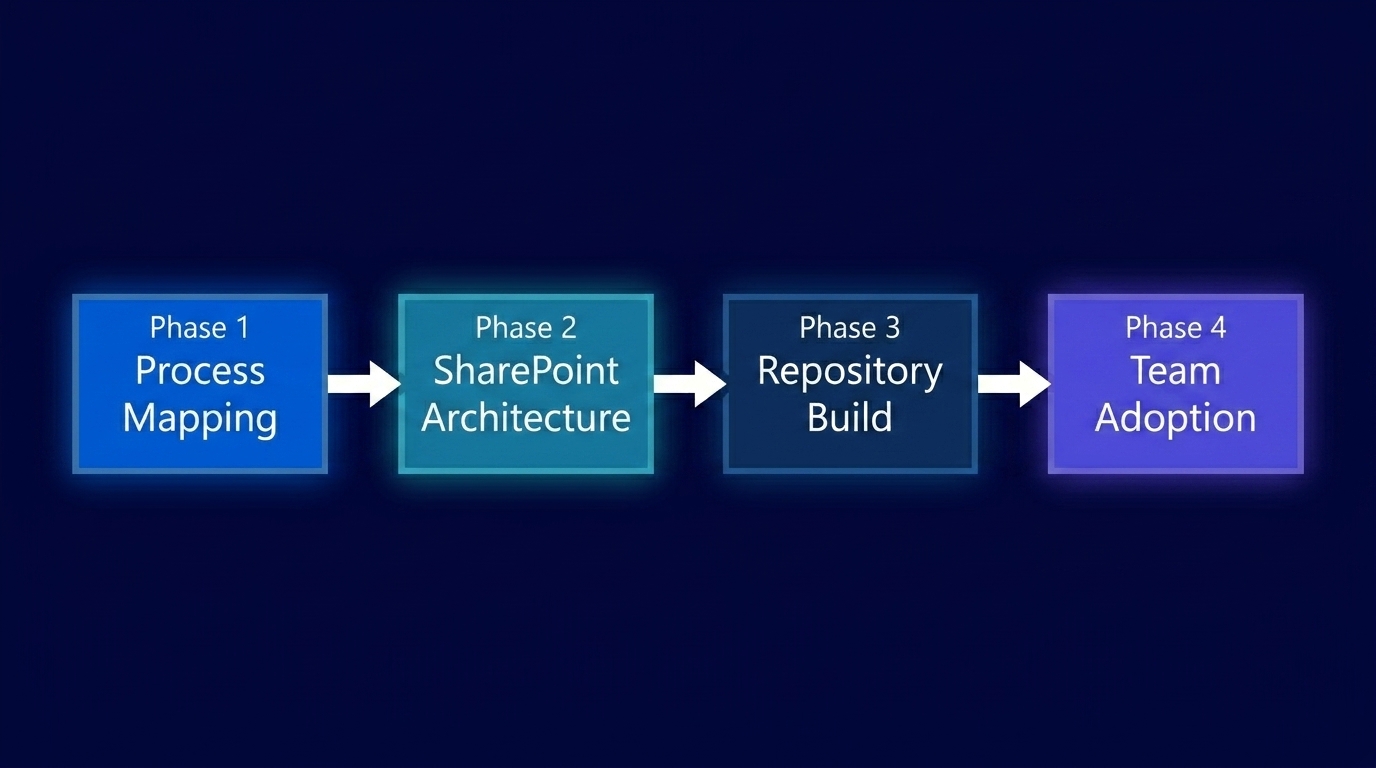
Phase 1
Process Mapping
Documented the research organization’s full proposal lifecycle, from solicitation identification through submission, cataloging document types, collaboration patterns, and institutional knowledge gaps.
Phase 2
SharePoint Architecture
Designed a SharePoint proposal management system with document libraries organized by proposal, past performance repository, boilerplate library, and proposal status tracking.
Phase 3
Repository Build
Migrated existing proposal documents and past performance materials into the SharePoint system with consistent tagging and search indexing.
Phase 4
Team Adoption
Trained the research organization’s proposal teams on the new SharePoint environment, establishing consistent naming conventions and library practices for ongoing proposal work.
Technical Transformation
i3solutions delivered a centralized SharePoint proposal management system that gave the research organization a single source of truth for all proposal activity. Proposal teams collaborate in shared SharePoint workspaces rather than email chains, every document has a defined location, a version history, and access controls appropriate to the proposal’s sensitivity. The past performance repository and boilerplate library are searchable and maintained centrally, so proposal writers pull from institutional knowledge rather than recreating content from memory. Proposal managers can see the status of all active proposals without asking each team individually.
Measurable Outcomes
| Metric |
Result |
| Document Centralization |
All proposal materials consolidated in a searchable SharePoint repository, no more hard drive silos |
| Version Control |
SharePoint document versioning eliminated the confusion of multiple simultaneous document versions in email circulation |
| Collaboration Structure |
Team collaboration moved to shared SharePoint workspaces with clear document ownership and access controls |
| Institutional Knowledge |
Searchable past performance repository and boilerplate library give proposal writers immediate access to the research organization’s full institutional history |
| Proposal Visibility |
Proposal managers have real-time view of all active proposals and their status without manual status collection |
[PENDING-CLIENT-QUOTE: insert 1-3 sentence outcome-focused quote in the client’s own language from a role matching the reader’s role.]
[Name or Role], [Organization type]
Frequently Asked Questions
What is SharePoint proposal management for research organizations?
SharePoint proposal management creates a centralized digital environment for the full proposal lifecycle, document storage with version control, team collaboration workspaces, past performance repositories, and proposal status tracking. For research organizations like the research organization, where proposals secure the funding for all research activity, a well-organized proposal system directly affects institutional revenue and research capacity.
How does i3solutions approach proposal management system implementation for research and nonprofit organizations?
i3solutions begins with process mapping that traces the full proposal lifecycle from solicitation to submission. For research organizations, the key design challenge is that proposals involve diverse team members with different roles, principal investigators, past performance managers, writers, reviewers, and compliance staff, who need different access and different views of the same proposal materials. i3solutions designs the SharePoint architecture around those role distinctions.
How does SharePoint version control work for proposal documents?
SharePoint’s document versioning maintains a complete history of every change to every proposal document, with the ability to restore any prior version. When multiple team members need to contribute to the same document, i3solutions configures check-in/check-out controls to prevent simultaneous conflicting edits. Proposal managers can see who made which changes and when, and can ensure that final submission documents reflect the most current approved content.
What ROI should research organizations expect from proposal management system implementation?
Research organizations that centralize proposal management typically see measurable improvement in proposal quality (because writers access current institutional knowledge rather than recreating it from memory), proposal cycle time (because collaboration is structured rather than through email), and win rate (because proposals are built from approved, current content). the research organization gained all three through its SharePoint implementation.
Why choose i3solutions for SharePoint proposal management?
i3solutions has built SharePoint proposal management systems for clients including Pratt & Whitney, the defense systems manufacturer, KBR, and the research organization, consistently delivered on-time, in-scope, in-production. Our all-senior team brings 600+ Microsoft platform implementations and deep SharePoint architecture experience. Our 15-Business-Day Microsoft Assessment gives research organizations a clear implementation plan.
Who This Engagement Serves
This engagement is relevant if
- A government agency struggling to manage collaborative research grant proposals across multiple disparate locations.
- A nonprofit institution where research teams still store critical project data on individual workstation hard drives.
- A university department that must collaborate on data-intensive studies without an existing enterprise version control system.
Less relevant if
- A large commercial bank requiring advanced trading systems but not academic research data management capabilities.
- A small business that already fully utilizes dynamic, version-controlled shared documents within a Google Workspace environment.
Ready to establish a governed Microsoft environment?
i3solutions delivers enterprise digital transformation on-time, in-scope, in-production. Microsoft Gold Partner since 1997. 600+ implementations. All-senior, all US-based team.
Schedule a 15-Business-Day Microsoft Assessment