Case Study • Defense / Engineering • Proposal Management
Network Drives, Manual Processes, 100 Proposals Per Year: How KBR Built an Enterprise Proposal Management System
Strategic Trigger
Global Proposal Tools Creating Version Conflicts and Missed Deadlines
As KBR’s global operations expanded, various regional business units adopted disparate proposal tools and content management practices. This fragmentation resulted in a chaotic operating environment where proposal teams struggled with severe version control conflicts. Critical content was frequently overwritten, and assembling complex, multi-billion dollar proposals required significant manual reconciliation of data across siloed systems. These inefficiencies led to increased operational costs, high stress levels for proposal teams, and, most critically, multiple instances of missed submission deadlines, directly jeopardizing KBR’s ability to compete for essential government and commercial contracts on a global scale.
KBR leadership recognized that this fragmented technological landscape was no longer sustainable and was actively undermining their competitive position. They realized that securing high-value contracts required a modernized, standardized approach to proposal management. Leadership committed to implementing a single, unified global platform that would enforce process consistency, ensure content integrity, and facilitate seamless real-time collaboration across all international time zones. They demanded a solution that would eliminate technical bottlenecks, reduce administrative overhead, and empower their business development teams to focus purely on strategic content, quality, and winning new business.
Stakes
Billions in Revenue at Risk from Proposal Inefficiencies
The financial stakes of failing to modernize the proposal process were enormous for an enterprise of KBR’s scale. Missing submission deadlines for major government procurements or complex infrastructure projects meant immediate disqualification and the automatic loss of potential revenue totaling billions of dollars. Furthermore, the inefficiencies inherent in the fragmented system dramatically increased the cost-to-win. Excessive billable hours were wasted on administrative rework, content reconciliation, and emergency troubleshooting rather than high-value strategic positioning, directly eroding the profitability of pursuit efforts and straining critical business development budgets.
Beyond direct financial losses, the persistent operational issues posed a severe threat to KBR’s long-term reputation and market credibility. Consistently failing to submit polished, cohesive, and timely proposals signaled operational weakness to prospective clients, including government agencies that demand extreme administrative rigor. Internally, the chaotic environment caused significant frustration among top business development talent, risking high staff turnover as skilled proposal managers sought organizations with better tooling. The strategic risk was the erosion of KBR’s competitive advantage, allowing more digitally agile competitors to win market share by consistently delivering superior, compliant proposals.
Constraints and Complexity
Global Data Security and Cross-Border Collaboration Compliance
The implementation faced significant complexity due to KBR’s strict security requirements and global operational footprint. The solution needed to handle sensitive information, including International Traffic in Arms Regulations (ITAR) data and proprietary technical specifications, mandating complex data residency and access control configurations within a single environment. Additionally, standardizing a unified workflow required overcoming deeply ingrained regional process variations and cultural resistance to change. The technology had to be robust enough for high-concurrency usage by hundreds of global users, yet flexible enough to accommodate the urgent, high-pressure timelines typical of major contract pursuits.
The data migration effort presented a daunting challenge, involving the extraction, cleansing, and consolidation of thousands of legacy proposals and reusable content assets stored in various formats across disconnected network drives, local repositories, and older, non-standardized SharePoint instances. Maintaining data integrity and establishing accurate metadata during this transition was critical for future searchability and content reuse. Any loss of historical data or corruption of existing templates would have severely disrupted ongoing live proposals, creating an unacceptable operational risk. The cutover to the new system had to be meticulously planned to avoid any downtime during critical submission windows.
Selection Rationale
Senior Microsoft Specialists with Proven Delivery Depth
KBR initially evaluated several options, including deploying a niche, proprietary proposal management software application or attempting to manage the internal upgrades using existing, but overstretched, IT resources. The proprietary software route was deemed too risky due to high licensing costs, limited customization options to meet unique security requirements, and potential integration challenges with existing enterprise systems. Conversely, the internal IT team lacked the specific, deep expertise in architecting complex, global SharePoint environments optimized specifically for high-stakes collaborative document creation, forcing KBR to seek a specialized external partner with proven experience in large-scale Microsoft implementations.
KBR selected i3solutions because of their elite status as a Microsoft Gold Partner since 1997, demonstrating an uninterrupted, decades-long history of technical excellence and deep vendor alignment. With a track record of over 600 successful enterprise implementations, i3solutions provided the specialized depth required for this mission-critical project. KBR specifically valued i3solutions’ unique model of utilizing only all-senior, all-US-based personnel. This structure guaranteed that KBR was not paying for junior resources to learn on the job, but rather engaging seasoned experts who could immediately address complex architecture, security compliance, and data migration challenges without communication barriers.
The Enterprise Challenge
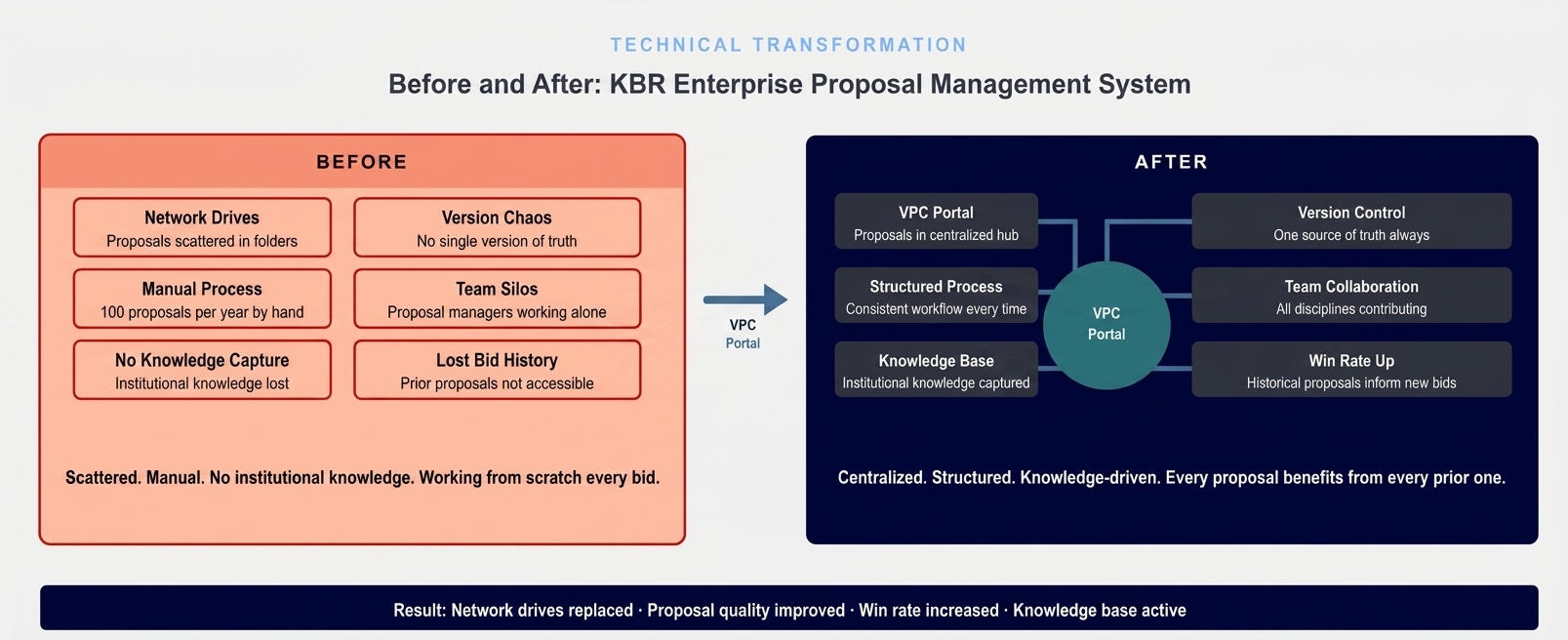
KBR’s Proposal Management Team manages and maintains all proposal-related information and assets for the global enterprise, producing approximately 100 proposals per year. The former proposal management process was largely manual, with proposal assets stored across network drives and folders, and every proposal built largely from scratch without the ability to leverage the deep institutional knowledge accumulated across previous proposals. Proposal managers were frustrated by the inefficiencies inherent in this manual system and felt they had no means of leveraging the knowledge amassed within the company.
Multiple prior attempts – both internal and external – had failed to deliver a solution that matched KBR’s requirements. i3solutions built an Enterprise Proposal Management System that replaced the manual network drive process with a centralized SharePoint-based Virtual Proposal Center delivering consistent workflows, structured knowledge capture, and the collaboration tools needed to build competitive proposals from institutional knowledge rather than from scratch.
The Engagement Approach
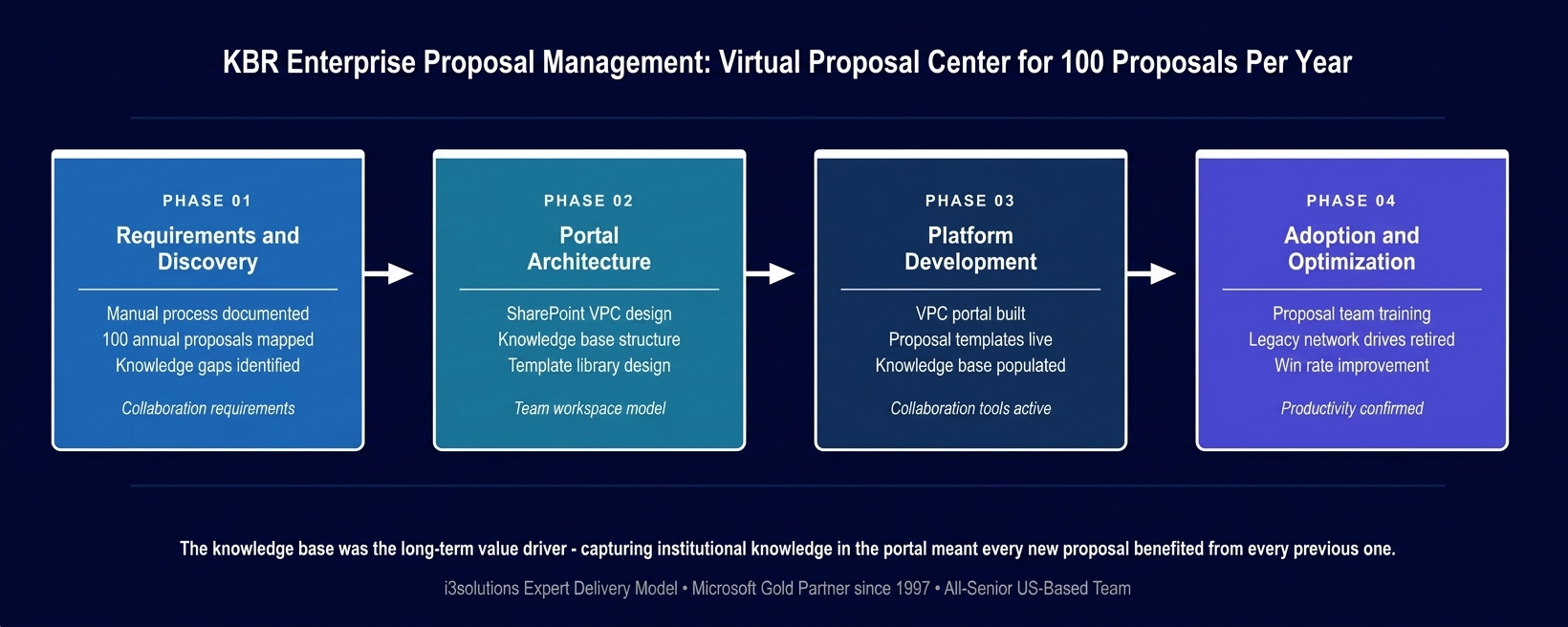
PHASE 01
Requirements and Discovery
Documentation of the manual proposal process. Identification of knowledge capture gaps. Collaboration requirements across proposal team disciplines. Prior failed implementation root cause analysis.
PHASE 02
Portal Architecture
SharePoint VPC design with centralized proposal workspace. Knowledge base structure for institutional knowledge capture. Template library for reusable proposal components. Team workspace model for cross-discipline collaboration.
PHASE 03
Platform Development
VPC portal built with structured proposal creation workflow. Knowledge base populated with historical proposal content. Template library enabling reuse of prior work. Collaboration tools connecting proposal managers, technical staff, and subject matter experts.
PHASE 04
Adoption and Optimization
Proposal team training. Legacy network drives retired. Win rate improvement measured against prior period. Knowledge base growing with every completed proposal.
Technical Transformation
Measurable Outcomes
| Metric | Before | After | Improvement |
|---|
| Proposal storage | Network drives and folders | Centralized SharePoint VPC | Proposal centralization achieved |
| Process consistency | Manual – varied by proposal manager | Structured workflow every time | Consistent process enforced |
| Knowledge capture | Not captured – lost after each proposal | Knowledge base growing with every proposal | Institutional knowledge preserved |
| Team collaboration | Proposal managers working in silos | Cross-discipline collaboration in shared workspace | Collaboration active |
| Win rate | Prior period baseline | Improved against prior period baseline | Win rate improved |
| Time to produce proposals | Manual process consuming significant time | Reduced through templates and knowledge reuse | Proposal production faster |
[PENDING-CLIENT-QUOTE: insert 1-3 sentence outcome-focused quote in the client’s own language from a role matching the reader’s role.]
[Name or Role], [Organization type]
Frequently Asked Questions
Proposal Management Software for Defense and Engineering Firms
What is proposal management software for defense and engineering organizations?
Proposal management software for defense and engineering organizations is a Virtual Proposal Center built on SharePoint that replaces manual, network drive-based proposal processes with a centralized platform that standardizes proposal workflows, captures institutional knowledge from completed proposals for reuse on future bids, and provides the collaboration workspace that connects proposal managers, technical staff, subject matter experts, and reviewers in a single governed environment. For firms like KBR producing 100 proposals per year, the VPC converts proposal development from a labor-intensive process built largely from scratch to a systematic one that benefits from every prior engagement.
How does i3solutions build a Virtual Proposal Center on SharePoint?
i3solutions builds Virtual Proposal Centers in four phases: discovery that documents the current proposal process and identifies the specific knowledge capture gaps; architecture that designs the SharePoint site structure, document taxonomy, template library, and collaboration workspace; development that builds the platform to the architecture specification; and an adoption phase that onboards the proposal team, retires legacy network drives, and confirms the system is delivering the quality and efficiency improvements the engagement was designed to achieve. The knowledge base is seeded with content from prior proposals during implementation so the system has institutional value from day one, not after years of use.
How does a proposal knowledge base improve win rates?
A proposal knowledge base improves win rates by making the institutional knowledge accumulated across previous proposals accessible and searchable for current bids. Instead of proposal managers relying on personal memory or informal networks to find relevant prior approaches, a structured knowledge base allows them to search by customer, technology, contract type, or topic, surfacing relevant technical approaches, past performance examples, pricing structures, and proposal language that can be adapted and incorporated. Proposals built on accumulated institutional knowledge are more complete, more consistent, and more competitive than proposals built from scratch because they incorporate the learning from every prior engagement the firm has completed.
What is the impact of proposal management centralization on team collaboration?
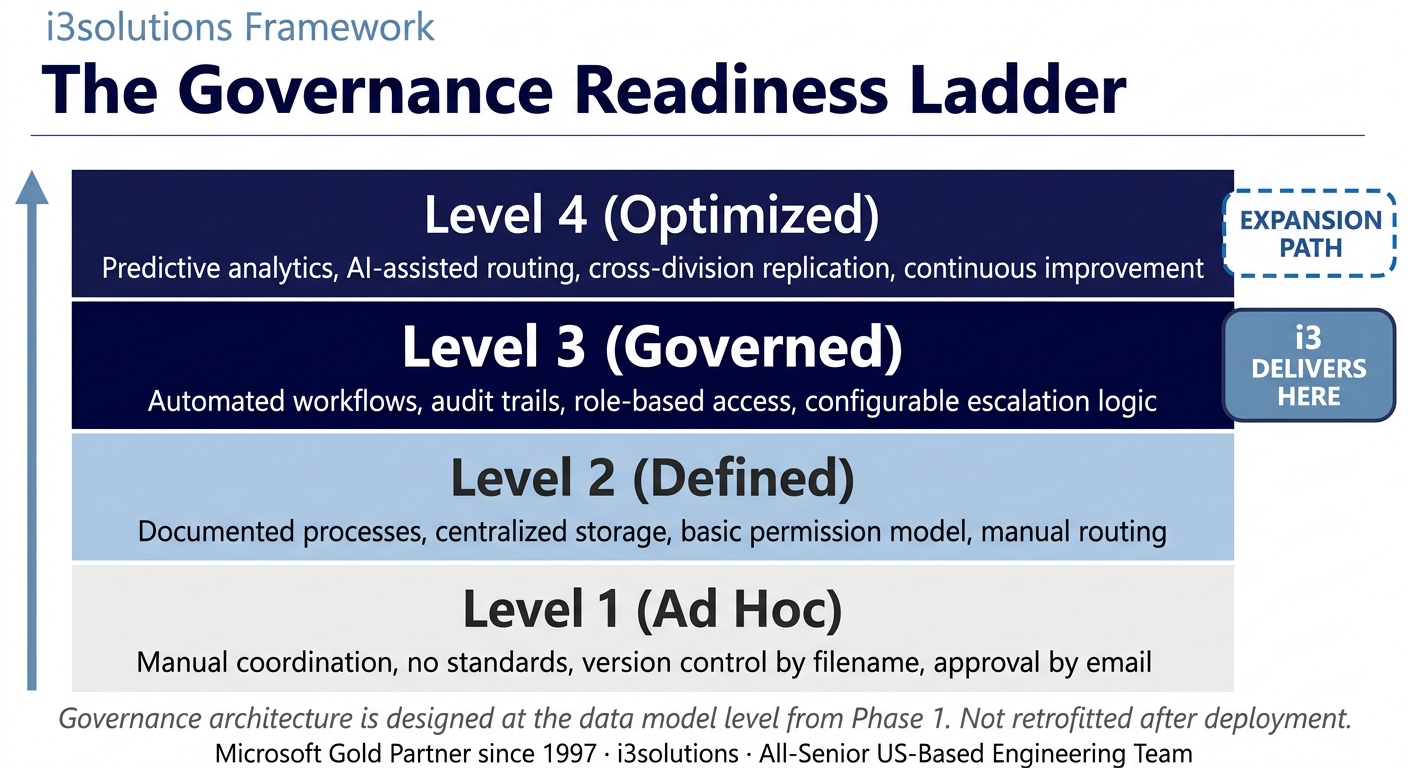
Proposal management centralization creates structured collaboration by giving all contributors, proposal managers, technical writers, subject matter experts, pricing analysts, legal reviewers, a single shared workspace where proposal content is developed, reviewed, and approved in one place rather than distributed across email threads, shared drives, and personal folders. Version control is automatic rather than managed through filename conventions. Review comments appear in context rather than in disconnected email chains. Approval workflows route automatically to the right reviewers at the right stage. The result is a proposal development process where all contributors are working from the same current version of the proposal rather than different versions that need to be reconciled at deadline.
Why choose i3solutions as a Virtual Proposal Center implementation partner?
i3solutions has built Virtual Proposal Centers across defense, aerospace, engineering, and professional services firms, developing the pattern recognition that distinguishes a VPC that achieves adoption from one that becomes an unused SharePoint site. The critical success factors, knowledge base structure that matches how proposal teams actually search for content, template designs that accelerate rather than constrain proposal development, workflow configurations that mirror the actual approval process, are learned through engagement experience, not generic SharePoint training. i3solutions brings that experience, an all-senior delivery team, and a 27-year track record as a Microsoft Gold Partner to every VPC engagement.
Back to Case Study Library
60 enterprise Microsoft implementations documented
Related Insights
From the i3solutions YouTube Channel
Short-form perspectives on the delivery and technology challenges in this case study.
Who This Engagement Serves
This engagement is relevant if
- A global consulting firm with disparate offices struggling to coordinate proposal responses and version control.
- A multinational defense contractor facing compliance risks due to inconsistent document management across international teams.
- An engineering giant needing a unified platform to manage complex, multi-billion dollar project proposals.
Less relevant if
- A small, single-office company looking for a simple, low-cost document storage solution rather than comprehensive knowledge management.
- A firm seeking a specialized customer relationship management tool rather than a comprehensive knowledge management system for proposals.
Ready to replace manual proposal management with a Virtual Proposal Center?
The 15-Business-Day Microsoft Assessment maps the SharePoint VPC architecture, knowledge base structure, and collaboration workflow that would convert your proposal process from manual to systematic.
Microsoft Gold Partner since 1997. 600+ implementations. All senior. All US-based.
Schedule the Assessment