Case Study · Healthcare Licensing
Manual Reports on Request, Missed Revenue: How the national physical therapy licensing board Built a Self-Service Reporting Platform
Client: the national physical therapy licensing board (the national physical therapy licensing board)

The Enterprise Challenge
The the national physical therapy licensing board (the national physical therapy licensing board) develops and administers the National Physical Therapy Examination (NPTE), the licensing examination required for physical therapists and physical therapist assistants across all 50 states, DC, Puerto Rico, and the Virgin Islands. Physical therapy educational institutions rely on NPTE data to understand how their graduates perform on the licensing examination, benchmark against national pass rates, and demonstrate program quality to accreditation bodies.
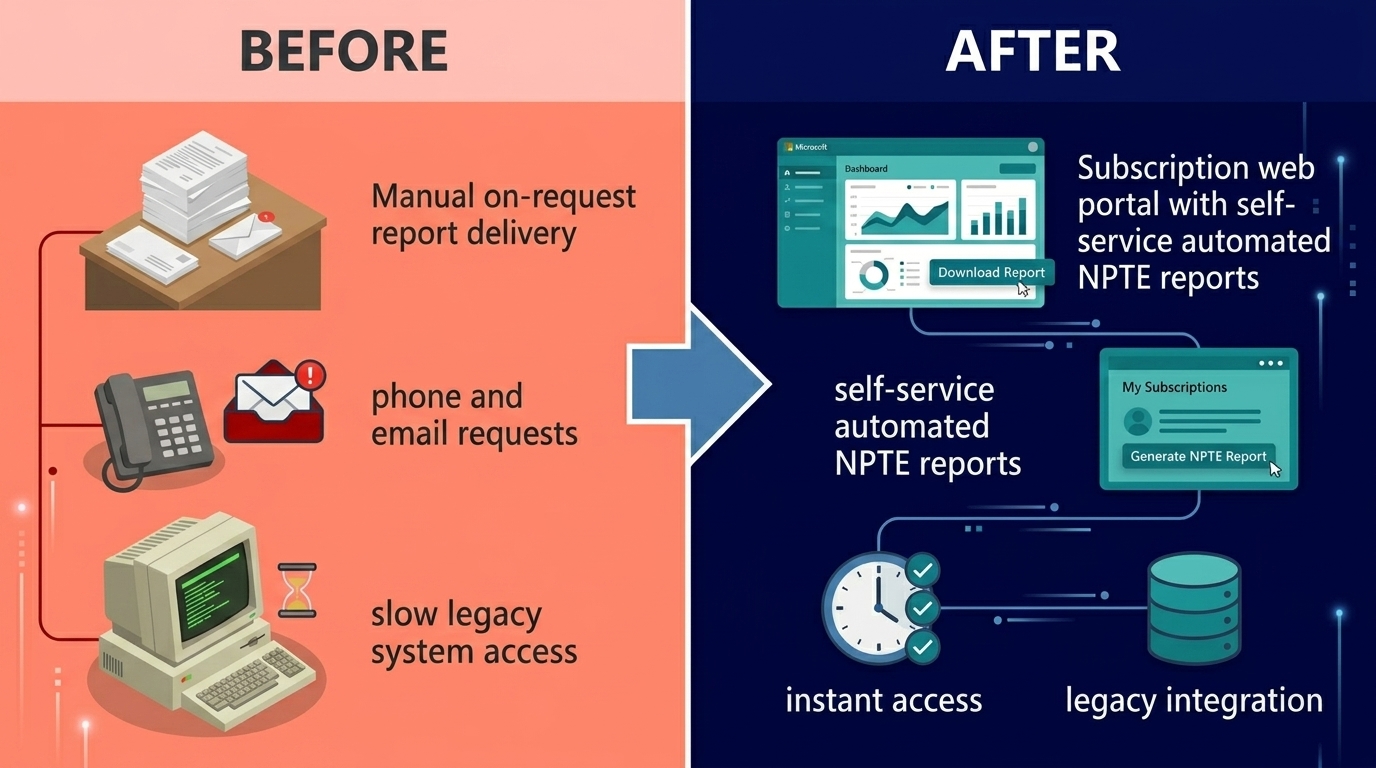
As demand for this data grew, the national physical therapy licensing board was fielding a rising volume of requests from school administrators who wanted their institution’s NPTE performance data. The delivery process was entirely manual: administrators contacted the national physical therapy licensing board staff, requests were queued, staff ran reports from legacy systems, and results were delivered by email or mail. Each report consumed staff time. There was no self-service capability, no standardized delivery format, and no recurring revenue model to offset the cost of the growing service demand.
The Strategic Trigger
the national physical therapy licensing board needed a web-based platform that would allow PT school administrators to access their institution’s NPTE data on demand, through a subscription model that recovered the cost of the service and created a new revenue stream. The platform had to integrate with the national physical therapy licensing board’s existing legacy examination data systems, pulling current, accurate data without manual extraction, and deliver reports in formats useful to academic administrators and accreditation processes.
The Engagement Approach
Strategic Trigger
Physical therapy licensing slowed by manual score reporting
The the national physical therapy licensing board (the national physical therapy licensing board) faced a critical operational bottleneck in administering the National Physical Therapy Examination (NPTE). Each testing cycle generated thousands of individual score reports that had to be manually processed, verified, and securely distributed to licensing boards across all 50 states, the District of Columbia, Puerto Rico, and the Virgin Islands. As the volume of candidates grew annually, this labor-intensive process pushed the limits of the national physical therapy licensing board’s internal resources, resulting in escalating operational costs and increased strain on staff tasked with meeting strict deadlines.
This manual workflow introduced unacceptable risks. Even with rigorous internal controls, the potential for data entry errors, accidental omissions, or distribution delays was significant, threatening the reliability of the score-reporting process. the national physical therapy licensing board leadership recognized that this antiquated approach was unsustainable and counter to their mission of providing efficient licensing services. They committed to a digital transformation initiative, prioritizing the replacement of the manual system with a sophisticated, custom-developed solution that could automate the entire distribution process, thereby ensuring scalability, accuracy, and timeliness for state boards.
Stakes
Regulatory compliance risked by score distribution delays
The operational inefficiency was not merely a convenience issue; it posed significant risks to the regulatory ecosystem. State licensing boards depend on the timely receipt of NPTE scores to make final licensing decisions for physical therapists and physical therapist assistants. Any delay in processing and distributing these scores directly impacted candidates’ ability to enter the workforce, causing frustration and potentially leading to staff shortages in healthcare facilities. Continued reliance on manual efforts amplified the operational cost per report, eroding budget efficiency that should have been allocated to other strategic initiatives.
Furthermore, the manual handling of thousands of sensitive score reports created vulnerabilities related to data integrity and privacy. The the national physical therapy licensing board holds a pivotal position of trust between state governments, educational institutions, and candidates. Any high-profile error or delay attributable to process failure could significantly damage the organization’s reputation and credibility. Leadership understood that inaction wasn’t an option; they needed to proactively modernize their delivery mechanism to maintain the confidence of their stakeholders and ensure the continued integrity and relevance of the national examination program.
Constraints and Complexity
Integrating heterogeneous state data while maintaining absolute security
The core complexity lay in the sheer diversity of the stakeholder endpoints. The custom system needed to interface with over 50 state jurisdictions, each operating with varying levels of technological maturity and unique reporting standards. Automating the workflow required designing a flexible architecture that could aggregate and standardize NPTE scores while simultaneously accounting for the specific data format and transmission protocols required by each individual state board. This demanded a solution capable of handling highly variable inputs and delivering customized outputs reliably across disparate external systems without manual intervention.
Furthermore, absolute security and data privacy were non-negotiable constraints. The solution would be transmitting sensitive candidate information, making it imperative to implement robust encryption, multi-factor authentication, and comprehensive audit trails. The system had to be designed from the ground up to prevent unauthorized access and protect candidate data at every stage, from processing to final delivery at the state board. This required a level of sophisticated custom development and security engineering that far exceeded the capabilities of off-the-shelf software or basic application customization.
Selection Rationale
Senior Microsoft Specialists with Proven Delivery Depth
the national physical therapy licensing board recognized that this critical infrastructure project required more than just generic coding; it demanded specialized, high-level expertise in complex systems integration and robust security protocols. They evaluated several alternatives, including larger global systems integrators, but quickly determined that the high overhead, complex management structures, and significant reliance on junior or offshore resources typical of those firms posed unacceptable operational risks. The potential communication gaps, time zone challenges, and generalized skill sets could not guarantee the level of precision and strategic alignment this mission-critical automation project required.
Instead, the national physical therapy licensing board selected i3solutions due to their deep technical expertise, demonstrated by their standing as a Microsoft Gold Partner since 1997. i3solutions brought an all-senior, all-US-based team, ensuring consistent communication, strategic accountability, and immediate access to deep technical resources. With a history of over 600 successful custom development and integration implementations, they provided the specialized knowledge and proven track record necessary to navigate the Federation’s complex data, security, and jurisdictional requirements, making them the low-risk, high-capability choice for this crucial project.
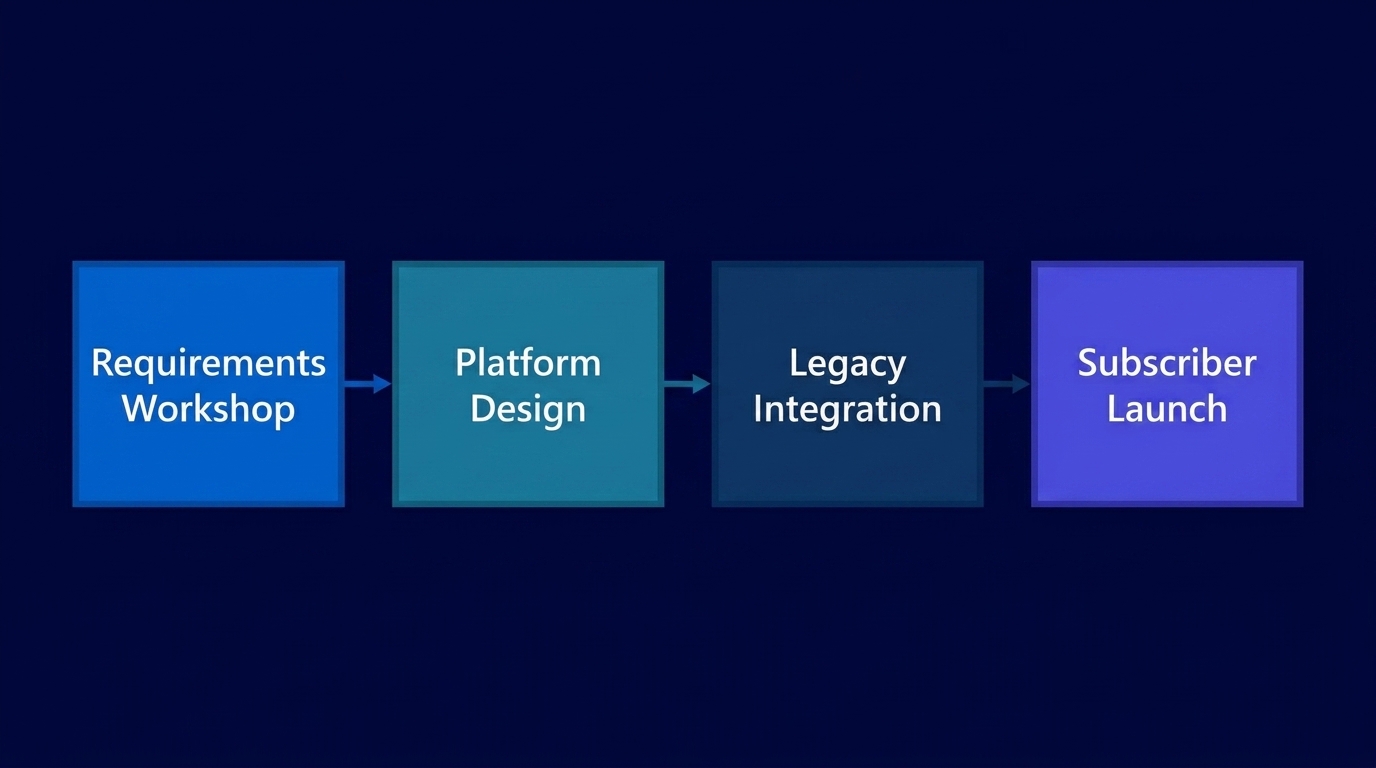
Phase 1
Requirements Workshop
Worked with the national physical therapy licensing board operations and school administrator stakeholders to define report types, subscription tiers, data access rules, and legacy integration requirements.
Phase 2
Platform Design
Architected a subscription web platform with authenticated school administrator accounts, report catalog, and self-service delivery engine.
Phase 3
Legacy Integration
Built secure data connectors between the new web platform and the national physical therapy licensing board’s existing legacy examination data systems.
Phase 4
Subscriber Launch
Deployed the platform with initial subscriber onboarding, training, and a support process for school administrators.
Technical Transformation
i3solutions delivered a subscription-based web reporting platform that transformed the national physical therapy licensing board’s manual, staff-intensive report delivery into a self-service capability for PT school administrators. School administrators now log in to an authenticated portal, select the reports they need, and receive current data immediately, drawn directly from the national physical therapy licensing board’s legacy systems through automated connectors. The subscription model created a new, recurring revenue stream that offsets the operational cost of the service while expanding access for member schools.
Measurable Outcomes
| Metric |
Result |
| Revenue Created |
New subscription model generates recurring revenue from a service that previously consumed staff time without direct cost recovery |
| Self-Service Enabled |
PT school administrators access NPTE data on demand without contacting the national physical therapy licensing board staff |
| Staff Time Recovered |
Manual report generation and delivery process replaced by automated platform, staff redirected to higher-value work |
| Legacy Integration |
Automated data connectors ensure reports always reflect current NPTE examination data from legacy systems |
| Access Expanded |
More PT educational institutions can access accreditation-supporting data without capacity constraints |
[PENDING-CLIENT-QUOTE: insert 1-3 sentence outcome-focused quote in the client’s own language from a role matching the reader’s role.]
[Name or Role], [Organization type]
Frequently Asked Questions
What is a subscription reporting platform and how does it create value for licensing organizations?
A subscription reporting platform is a web-based system that allows authorized subscribers, in the national physical therapy licensing board’s case, physical therapy school administrators, to access standardized data reports on a recurring fee basis. For licensing organizations, it converts a previously unmonetized service into a revenue stream while eliminating the manual effort of individual report fulfillment. The platform handles authentication, report generation, and delivery automatically.
How does i3solutions approach legacy system integration for healthcare and licensing platforms?
i3solutions maps the data architecture of the legacy system to understand what data exists, how it is structured, and how it can be extracted securely. For the national physical therapy licensing board, this meant building data connectors that could pull current NPTE examination data from legacy databases without disrupting the examination administration systems. i3solutions designs these connectors with error handling and data validation to ensure report accuracy.
How does automated report generation work in a subscription platform?
When a subscriber requests a report, the platform queries the connected data source, in the national physical therapy licensing board’s case, the legacy NPTE examination database, retrieves the relevant data for that institution, applies the defined report format and calculations, and delivers the completed report to the subscriber’s authenticated session. The entire process is automated: no staff involvement required from request to delivery.
What ROI should licensing and certification organizations expect from subscription reporting platforms?
Organizations that automate manual report delivery typically see 3 forms of return: direct revenue from subscription fees that offset or exceed previous service delivery costs, staff time recovery from eliminating manual report generation, and capacity expansion, the platform can serve more subscribers than a manual process allows. the national physical therapy licensing board achieved all 3: new revenue, recovered staff time, and expanded school administrator access.
Why choose i3solutions for custom healthcare and licensing technology platforms?
i3solutions has built custom platforms for healthcare, federal, and licensing organizations, including Brown Advisory, MCC, and the national physical therapy licensing board. Our all-senior team brings 600+ Microsoft platform implementations and expertise in legacy system integration to every engagement. We offer a 15-Business-Day Microsoft Assessment that gives licensing organizations a scoped, low-risk path to platform modernization.
Who This Engagement Serves
This engagement is relevant if
- Credentialing bodies needing to automate the dissemination of secure licensing exam results to registered stakeholders.
- National medical boards struggling with manual delivery of certification data to member state agencies.
- Professional associations looking to modernize manual score reporting and data exchange for their corporate subscribers.
Less relevant if
- Organizations that manage small-scale internal certification data requiring only simple, manual record-keeping.
- State-level boards seeking to process and view incoming candidate scores rather than distribute bulk data.
Ready to establish a governed Microsoft environment?
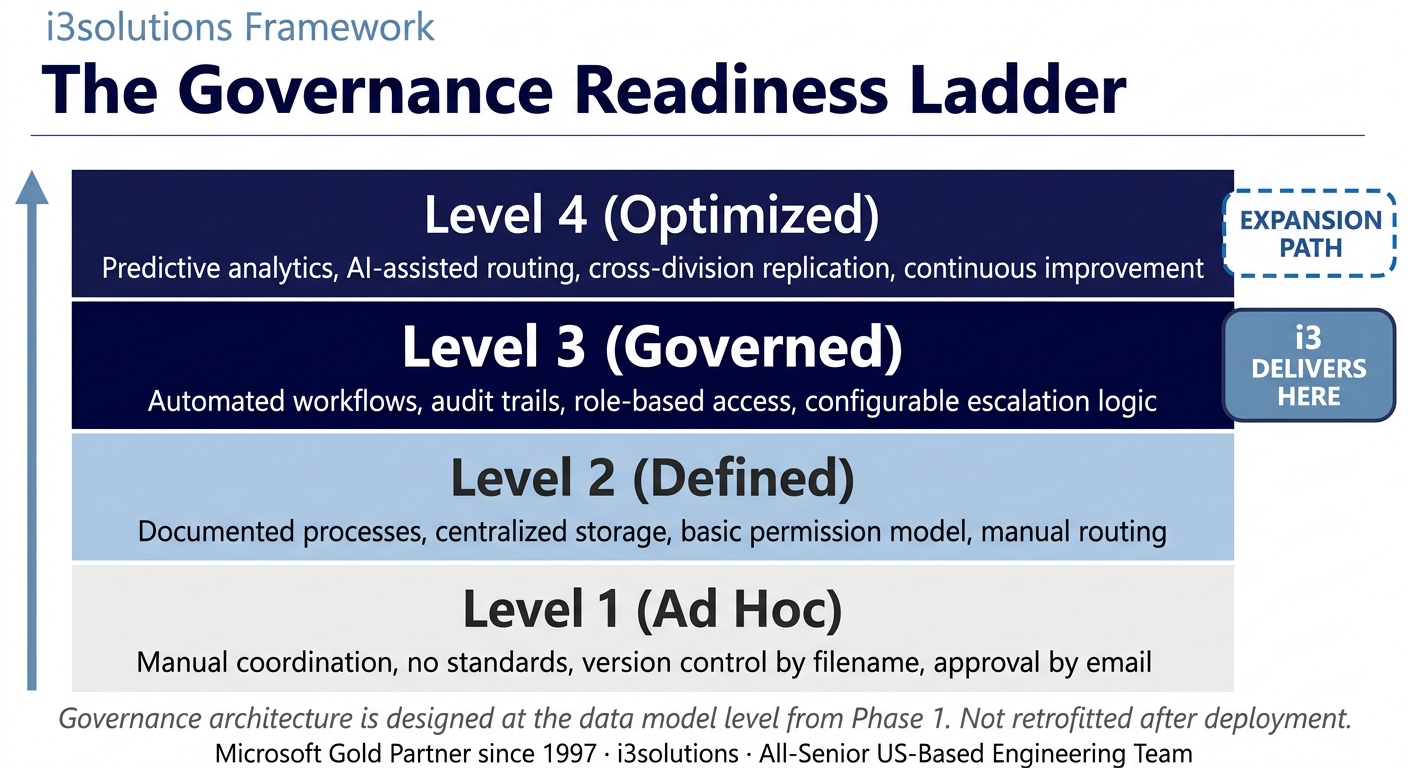
i3solutions delivers enterprise digital transformation on-time, in-scope, in-production. Microsoft Gold Partner since 1997. 600+ implementations. All-senior, all US-based team.
Schedule a 15-Business-Day Microsoft Assessment